
A termite barrier installed around a house in Kellyville, Castle Hill, or Ryde is not necessarily a set-and-forget defense. So, are termite barriers refillable? Chemical reticulation barriers often are. Physical barriers are not. Knowing the difference is essential because a system that looks intact may no longer have active chemical protection in the soil.
Subterranean termites travel underground, often entering through a concealed gap at a slab edge, plumbing penetration, wall cavity, or garden-side footing. They do not need a large opening. A maintained barrier gives a trained technician a controlled way to keep the vulnerable soil zone protected and to identify problems before structural damage escalates.
Are termite barriers refillable? It depends on the system
The term “termite barrier” covers two very different forms of protection. Chemical reticulation systems use installed pipework to distribute a registered termiticide below or around the building. These systems are specifically designed to be replenished through accessible fill points. Termguard, TermStop, TermX, Altis, Camilleri, Cavtech, and Reterm systems are common examples.
Physical systems, such as Termimesh, HomeGuard, Kordon, GreenZone, TermSeal, Smartfilm, and Trithor, work as a durable physical deterrent or inspection zone. They contain no chemical reservoir, so they cannot be refilled. Their protection depends on correct installation, continued visibility where required, and ensuring later building work has not bridged, cut, or compromised the barrier.
| Barrier type | Can it be refilled? | Ongoing requirement |
|---|---|---|
| Chemical reticulation system | Yes, if pipework and fill points remain serviceable | Professional inspection, scheduled recharge, and repairs if needed |
| Chemical soil treatment without reticulation | Not through a pipe network | Re-treatment may be applied to accessible soil after assessment |
| Physical termite barrier | No | Inspection for damage, bridging, alterations, and concealed entry points |
How a refillable termite reticulation system works
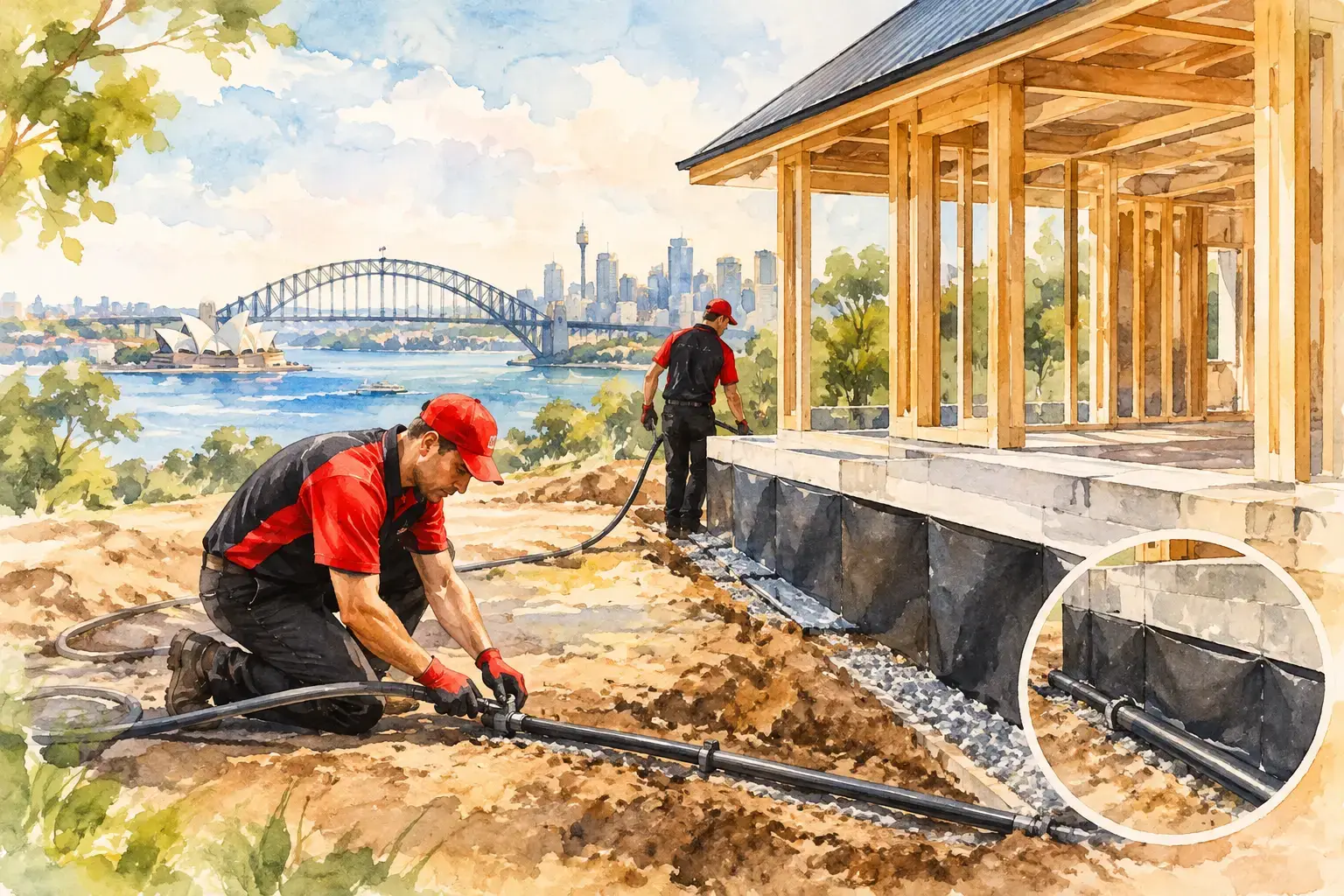
Reticulation is a network of perforated pipes installed in targeted soil zones before or after construction. The pipes are connected to emitter valves or fill points, usually positioned around the external perimeter. During a recharge, a licensed technician introduces the correct termiticide formulation and volume into the system so it disperses through the designed treatment zone.
This approach avoids unnecessary excavation around the house and provides a practical long-term service route. It is particularly useful where paving, landscaping, driveways, or tight side access make conventional trenching difficult. It does not make inspections optional. A reticulation line protects only where it was installed and only if the pipework is intact and the chemical barrier remains within its service life.
Practical advice
Find the system paperwork before booking a refill. Installation plans, past treatment certificates, product labels, and the location of fill points help confirm the brand, layout, and appropriate service method. If paperwork is missing, a technician can often identify the system during an inspection, but concealed or damaged components may need further investigation.
When should a chemical barrier be recharged?
There is no responsible one-size-fits-all refill interval. Timing depends on the chemical used, the system design, soil conditions, exposure, construction changes, and the label directions that apply to the original treatment. Your treatment certificate should state the expected service period and any inspection conditions.
For many Sydney properties, annual termite inspections are the sensible baseline even when a chemical barrier is still within its stated protection period. A recharge may be due at the end of that period, earlier if there has been major excavation or drainage work, or after a system assessment identifies a fault. Homes near bushland, with damp subfloors, mature gardens against walls, or known local termite pressure deserve particularly close attention.
Do not confuse an annual inspection with an automatic refill. Inspection checks whether the home has termite evidence, whether moisture and timber-to-soil issues are increasing risk, and whether the barrier appears accessible and serviceable. A refill renews chemical protection. Both have a role, but they are not the same service.
Events that can affect an existing barrier
Renovations are a common weak point. A new deck, retaining wall, garden bed, pathway, plumbing repair, air-conditioning line, or extension can cover inspection zones or disturb treated soil. Even a simple change such as piling mulch against brickwork can create a concealed route above the barrier line.
If you are buying a home with a reticulation system, arrange a professional termite inspection rather than relying on an old sticker inside the meter box. Ask whether the system has been recharged on schedule, whether fill points are accessible, and whether any additions have changed the original protection layout.
Warning signs a refill or repair may be needed
A missing cap, cracked emitter valve, buried fill point, or damaged pipe does not always mean termites are present. It does mean the system may not be ready for a proper recharge. Gardeners, landscapers, and trades can accidentally damage components, especially around side paths and perimeter garden beds.
More urgent warning signs include mud leads on brickwork or piers, blistered paint, hollow-sounding timber, doors that suddenly bind, unexplained moisture, or small piles of discarded wings near windows. Termites can remain hidden behind walls and beneath floors, so visible mudding is not required for serious activity.
Do not refill around active termites without assessment
If you suspect live termite activity, avoid disturbing mud leads, timber, or wall linings. An unsuitable chemical application can cause a colony to abandon one route and emerge elsewhere. A targeted treatment plan may involve baiting, direct treatment, wall-cavity work, soil treatment, or a combination based on the evidence found.
Refill, repair, or choose another treatment?
A sound reticulation system is valuable, but it is not always the only answer. Where pipework is blocked, crushed, incomplete, or inaccessible, repairs may restore its usefulness. In other cases, a localized soil treatment, termite baiting program, or a new protective design may be more appropriate. The right option depends on the building, the termite species and activity, access, and future renovation plans.
TERMITE HELP services multiple installed systems and assesses whether a recharge can be completed as intended rather than simply adding chemical and hoping for the best. Where termite activity persists after an eligible treatment service, the team will return to re-treat at no additional charge under the treatment program. That accountability matters when protecting a property that insurance commonly does not cover for termite damage.
What happens during a professional barrier service?
The visit should begin with the property, not the fill point. A technician checks accessible perimeter areas, slab edges, subfloor conditions where available, drainage, vegetation, and signs of termite entry. They locate and inspect emitter valves, assess line condition, and confirm whether a recharge can be delivered through the system as designed.
After service, keep the documentation. It should record the product used, treated areas or system, application details, service date, recommendations, and the next inspection or replenishment milestone. Digital records are useful for future owners, builders, and anyone planning landscaping or extensions.
A refillable barrier is a practical advantage, not a permanent exemption from termite risk. Keep fill points accessible, avoid building soil or timber bridges against the house, and have the protection reviewed before small maintenance issues become expensive structural repairs.