
If you are searching for Termguard Refill Schofields / Riverstone / Marsden Park, the priority is not simply adding more chemical. Your reticulation system needs to be checked, tested, and recharged correctly so the treated zone beneath and around the home remains a reliable line of defense against subterranean termites.
Homes across Sydney’s northwest often sit close to developing land, landscaped gardens, timber features, and moisture-prone areas that can support termite movement. A professionally maintained Termguard system helps place termiticide into the soil through installed pipes, avoiding unnecessary drilling or disturbance to finished floors.
How a Termguard refill protects your home
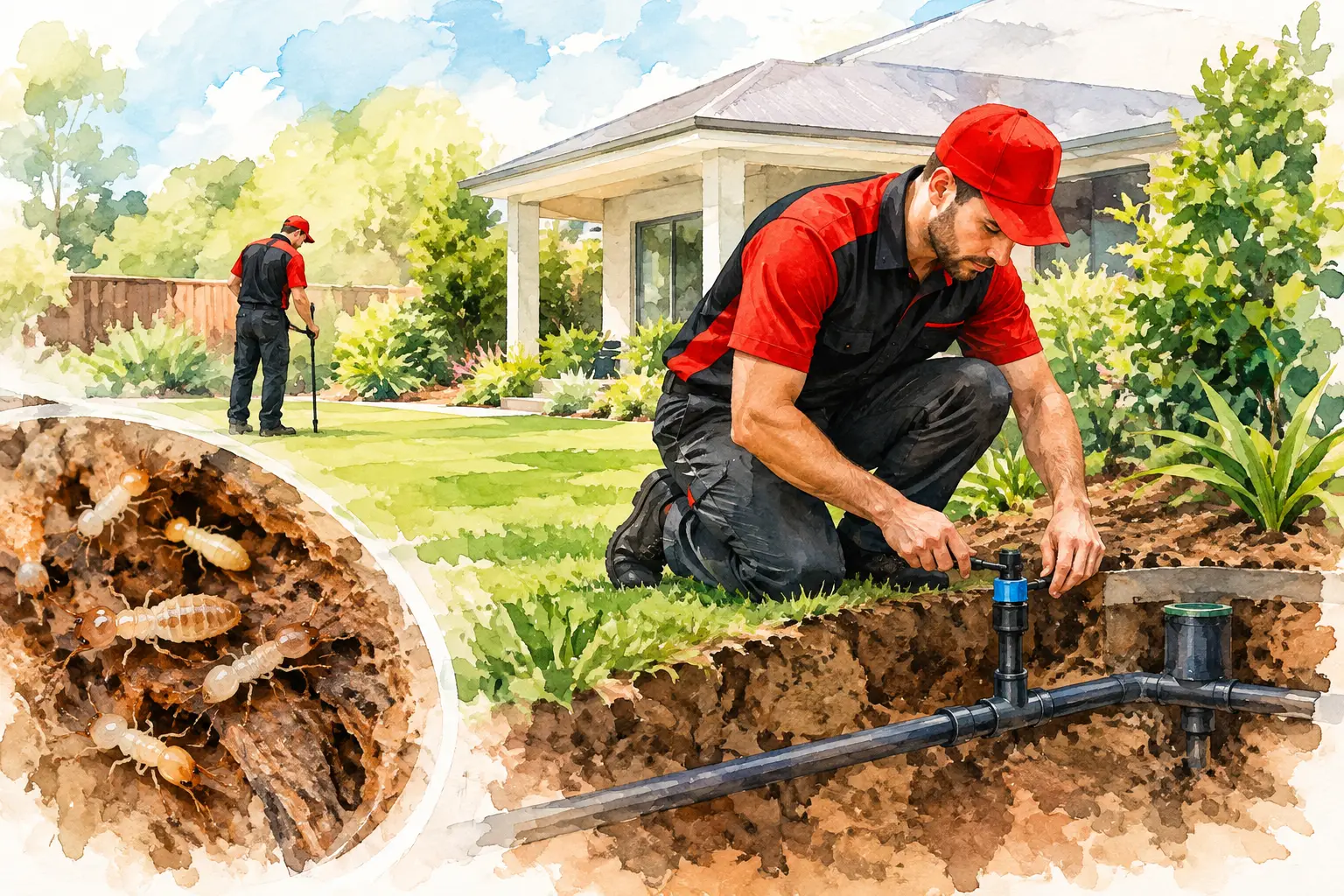
Termguard is a chemical reticulation system installed during construction or as part of a termite protection design. Its pipework delivers an approved termiticide to designated treatment zones through refill points, often located around the exterior perimeter or within concealed service areas.
The system is designed to support replenishable termite protection, but the pipes alone do not stop termites. Protection depends on the correct chemical, an even distribution through the system, intact pipework, accessible refill points, and a current treatment record. If any of these elements are compromised, termites may find an untreated path toward the building.
Practical advice
Do not rely on a refill date alone. Refill timing depends on the chemical used, product label directions, previous treatment records, soil conditions, building changes, and the results of a current termite inspection.
When to arrange a Termguard refill in Schofields, Riverstone, or Marsden Park
A refill should be considered when the treatment period recorded for your barrier is approaching expiry, when you have bought a property with an existing system, or after landscaping and building work has altered treated soil. New decks, garden beds, paving, drainage changes, retaining walls, and extensions can all affect access and create potential termite entry points.
It is also sensible to arrange an assessment if refill caps are damaged, buried, painted over, or difficult to locate. A system that cannot be accessed and tested cannot be confidently recharged. TERMITE HELP can inspect the system condition and advise whether a refill, repair, localized soil treatment, baiting program, or a combination of measures is the appropriate next step.
Warning signs that should not wait for the next refill
Termite activity can occur even where a reticulation system is installed. Mud tubes on brickwork, piers, or service penetrations, hollow-sounding timber, tight-fitting doors, bubbling paint, or unexplained damage around skirting boards require prompt investigation. Subterranean termites often travel behind walls, below flooring, and through concealed cavities, so visible damage may represent only part of the problem.
A professional inspection can assess accessible areas, moisture conditions, likely entry points, and signs of concealed activity. Thermal detection and targeted moisture readings may help guide further investigation, but they do not replace a thorough inspection of the property.
Refill, repair, or termite treatment?
The right response depends on the condition of the system and whether termites are present. A preventive refill is suitable when the system is sound, treatment coverage can be confirmed, and there is no evidence of active infestation. If pipework has been crushed, disconnected, blocked, or damaged during excavation, repairs may be needed before recharging.
| Service option | Best suited to | Key consideration |
|---|---|---|
| Termguard refill | A sound, accessible reticulation system due for replenishment | The correct chemical and documented treatment coverage matter |
| System repair | Damaged, blocked, or inaccessible pipework and refill points | Repairs should be completed before a recharge is relied upon |
| Active termite treatment | Confirmed termite activity or fresh evidence of entry | May involve non-repellent treatment, baiting, and follow-up inspections |
Keep the barrier visible in your maintenance plan
Keep your original installation certificate, refill records, product details, and inspection reports together. Before installing landscaping or hard surfaces near refill points, make sure they remain accessible. Direct downpipes away from the building where practical, repair plumbing leaks promptly, and avoid stacking timber, cardboard, or stored materials against the home.
A reticulation refill is valuable protection, but it works best alongside regular inspections. Termites can bridge treated zones through concealed construction details, altered soil, or untreated areas, which is why long-term protection should be reviewed as the property changes.
Protecting a major property investment starts with knowing whether your Termguard system is accessible, serviceable, and current before termites have an opportunity to exploit a gap.