Termites do not need a dramatic crack or obvious hole to reach a home. A gap around a pipe, an unprotected slab edge, or disturbed soil beside an extension can be enough. A Termidor chemical barrier is designed to protect those hidden entry points before termites reach the timber that supports your biggest investment.
For homes across Sydney’s Hills District, North West, and surrounding areas, this is not a one-time spray-and-forget job. Chemical termite protection works best as part of a monitored plan: correct treatment placement, a documented installation, regular inspections, and timely replenishment where a reticulation system is installed. Your peace of mind is our mission, and lasting protection depends on getting every part of that plan right.
What Is a Termidor Chemical Barrier?
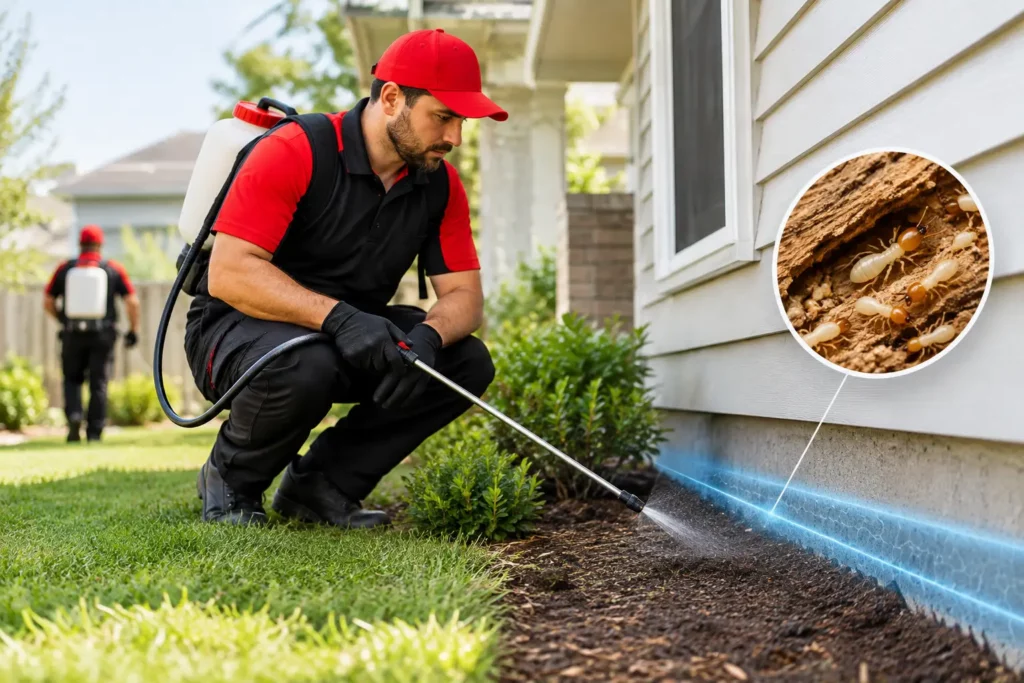
A Termidor barrier is a professionally applied soil treatment around, beneath, or within vulnerable sections of a building. It uses a non-repellent termiticide. Unlike a strongly repellent treatment that termites may avoid, a non-repellent treatment is intended to remain undetected as termites travel through treated soil.
That matters because subterranean termites forage out of sight. Workers can move from the soil to timber through expansion joints, service penetrations, wall cavities, and concealed construction gaps. When they contact the treated zone, the active ingredient can be transferred among termites through normal contact and grooming behavior. The goal is not merely to redirect termites. It is to break up the activity before it becomes structural damage.
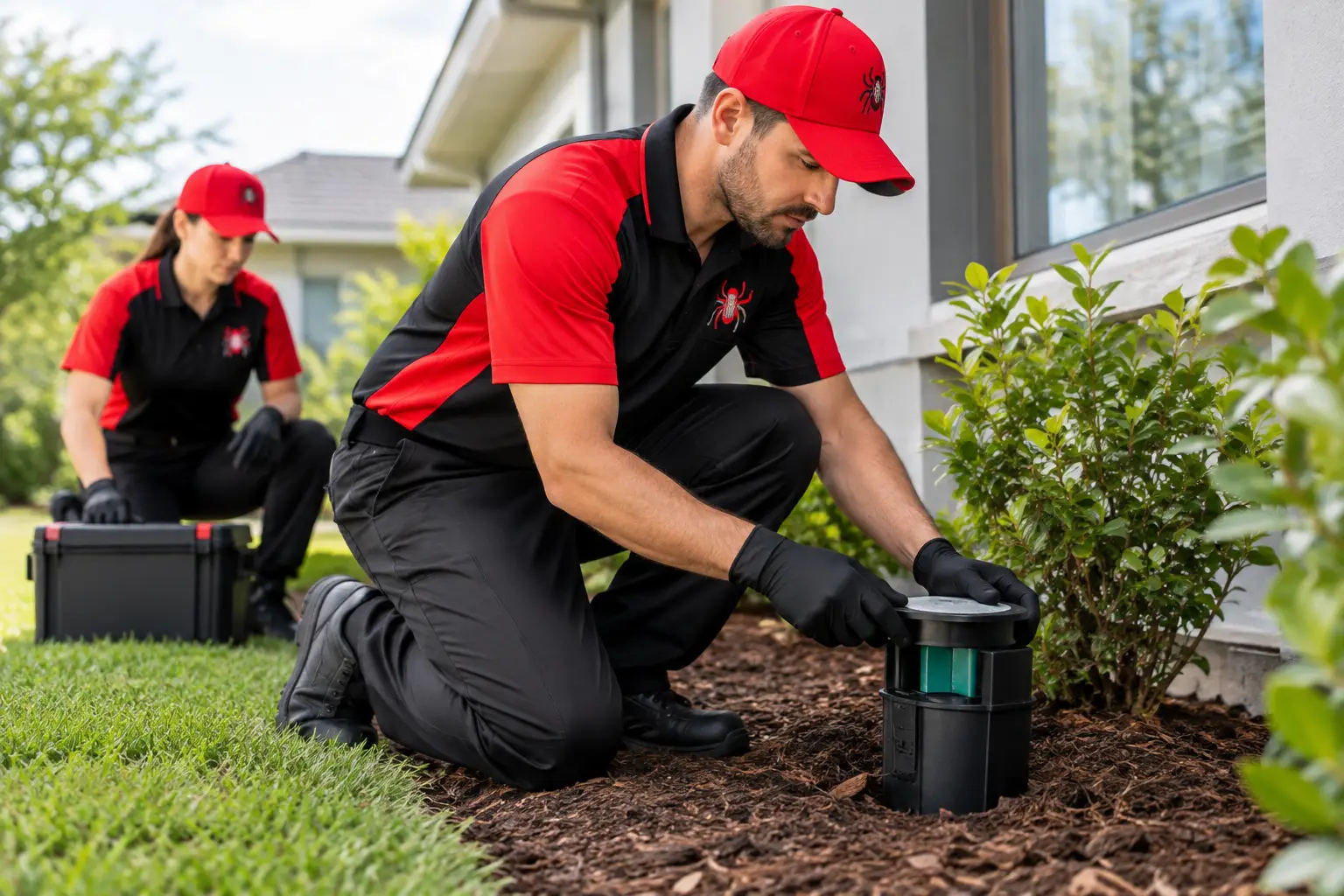
The barrier may be installed as a direct soil treatment, delivered through an installed reticulation system, or used in targeted areas such as a wall cavity. The right method depends on the construction, site access, soil conditions, drainage, landscaping, and whether termite activity has already been found.
Why the Installation Details Matter
A chemical barrier is only as reliable as its coverage. Termites are persistent and will exploit untreated pathways. That is why professional assessment matters more than choosing a product name alone.
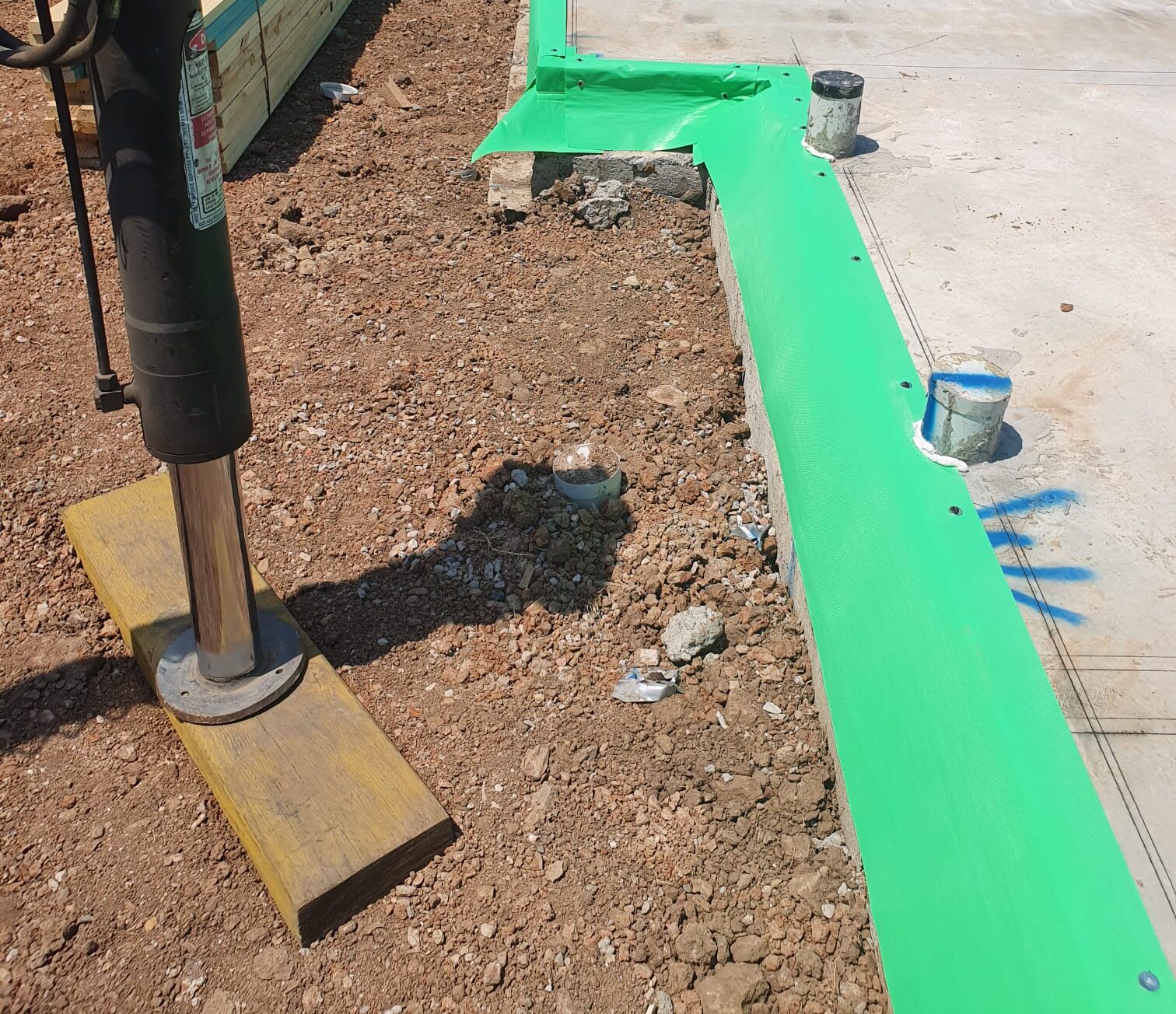
For an existing home, the technician must identify where termites can enter. These routes may include slab perimeters, plumbing penetrations, subfloor piers, adjoining paths, garden beds, and areas where soil levels sit too high against brickwork. On new construction, the barrier must coordinate with the slab, footings, penetrations, and construction schedule so the protection is continuous and documented for compliance.
A treatment plan also needs to account for the practical trade-offs. Dense concrete, built-in decks, paving, additions, and retaining walls can limit direct access to soil. In those cases, drilling, injection, wall-cavity treatment, or a replenishable reticulation line may be more appropriate than assuming a standard perimeter application will cover every risk area.
Direct Soil Treatment vs. Reticulation Systems
Both options can form part of a strong termite-defense program, but they serve different property needs. Direct treatment is often suited to accessible soil areas and targeted remedial work. Reticulation systems are installed pipe networks that allow a chemical barrier to be replenished through designated fill points without repeatedly digging around the home.
| Protection option | Best suited to | Key consideration |
|---|---|---|
| Direct soil treatment | Accessible perimeters, subfloors, and localized risk areas | Coverage can be affected by later excavation, landscaping, or building work |
| Chemical reticulation | Homes with installed replenishment lines and new-build protection plans | Requires system-specific testing, correct recharge procedures, and ongoing records |
| Wall-cavity treatment | Confirmed or suspected concealed entry in masonry cavity walls | A targeted measure that should be supported by a full property assessment |
If your property has TermStop, Termguard, Altis, TermX, Camilleri, Cavtech, Reterm, or another installed system, do not assume every contractor can service it properly. Emitter valves, line layouts, fill points, pressure, and recharge requirements vary. A system inspection should confirm that the reticulation remains serviceable before any top-up is recommended.
When Does a Termidor Barrier Need Service?
There is no responsible universal answer such as “every year, no exceptions.” The required schedule depends on the treatment type, label directions, construction changes, termite pressure, and the findings of each inspection. Annual professional inspections remain essential because no chemical barrier eliminates the need to look for activity.
A barrier may need review or corrective work sooner when you have completed landscaping, installed a pool, built a deck, repaired drainage, excavated beside the home, added an extension, or found moisture issues near the structure. These changes can disturb treated soil or create fresh termite access routes.
Watch for mud leads on brickwork or piers, soft or hollow-sounding timber, blistering paint, tight doors or windows, and unusual moisture around skirting boards. These signs do not always confirm termites, but they demand prompt investigation. Termites can continue feeding behind a wall long before damage is visible from the room.
A Chemical Barrier Is Not a Substitute for Inspection
The strongest termite program layers prevention with detection. A properly applied Termidor treatment can reduce the chance of concealed entry, but inspections reveal whether conditions have changed and whether termites have found another route.
Professional inspections should assess accessible internal areas, the exterior perimeter, roof voids where available, subfloors, fences and timbers close to the building, moisture sources, and any existing barrier system. Thermal equipment and moisture detection can help identify suspicious areas, but neither replaces a hands-on inspection of accessible construction.
For buyers, an inspection before purchase can expose active termites, damage, drainage concerns, and missing or compromised protection. For established homeowners, routine inspections turn a vague fear into a documented plan with clear next steps. Insurance commonly excludes termite damage, so waiting for visible evidence is an expensive gamble.
What to Expect From a Professional Assessment
A reliable assessment starts with the property, not a predetermined treatment. The technician should ask about previous termite work, inspect existing reticulation components, identify construction and moisture risks, and explain whether direct treatment, a recharge, repairs, baiting, or further investigation is appropriate.
You should also receive clear reporting on what was inspected, what was found, where the risks sit, and what work is recommended. If active termites persist after treatment, accountability matters. TERMITE HELP stands by its results and will return to re-treat qualifying ongoing activity at no charge, because protection should come with a clear remedy, not excuses.
Builders and renovators need the same discipline before concrete is poured or external works conceal access. A barrier installed at the correct construction stage is easier to verify, integrates more cleanly with physical protection, and supports the long-term maintenance plan for the completed home.
If your home has a chemical barrier, treat it as a living protection system rather than a certificate filed away after installation. A timely inspection, a system test, and a tailored service plan can keep a small concealed risk from becoming major structural loss.