
A Termguard Refill Edmondson Park / Bardia / Denham Court service is not just a maintenance visit. It restores the chemical protection delivered through the pipes around and beneath your home, helping stop concealed termite entry before it becomes structural damage. For newer homes in Sydney’s southwest growth corridor, keeping this system serviceable is a practical part of protecting a major investment.
How a Termguard refill protects your home
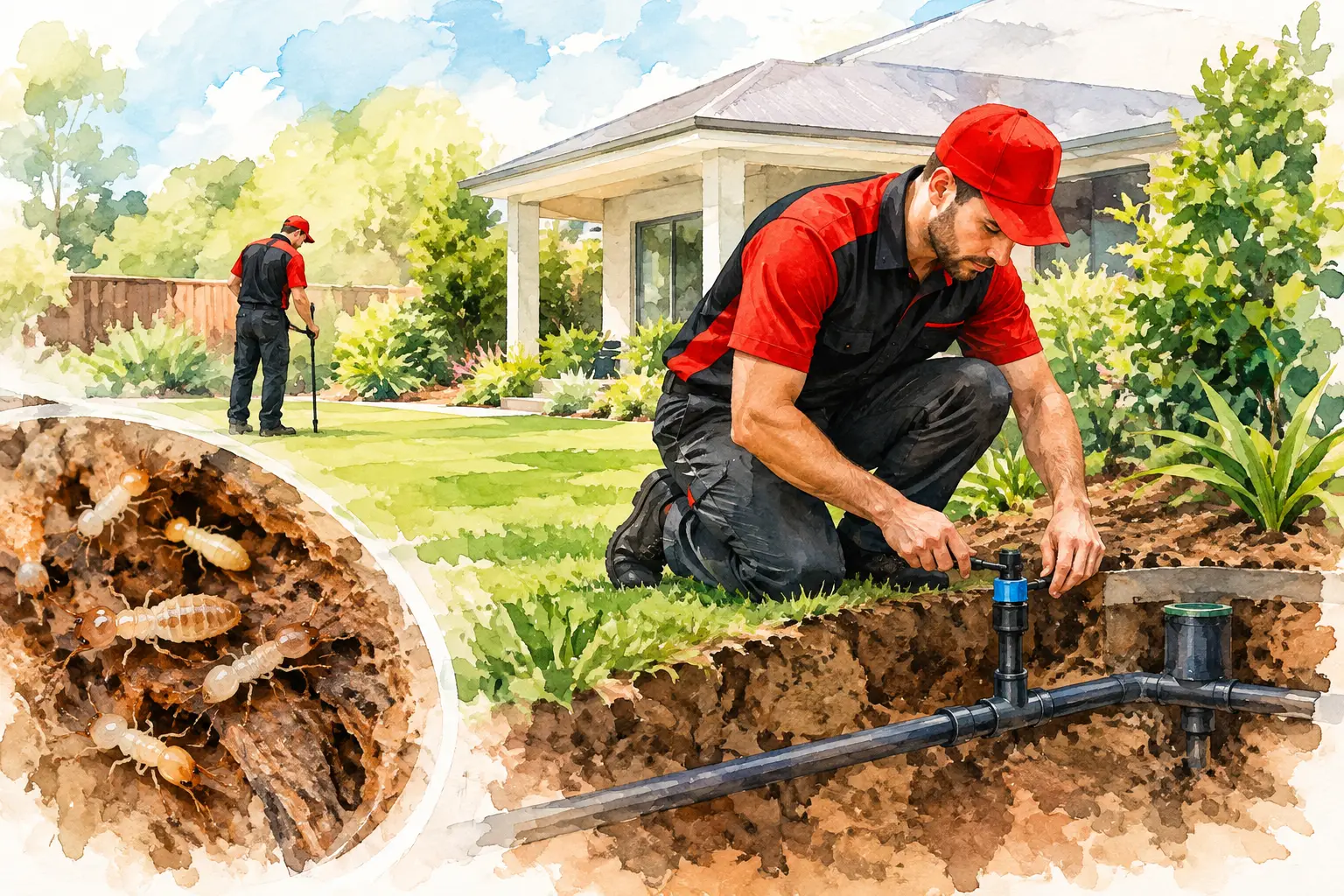
Termguard is a chemical reticulation system installed during construction. A network of pipes, commonly positioned around the slab perimeter and sometimes beneath internal areas, lets a licensed technician apply a registered termiticide into the soil without lifting paving, landscaping, or flooring.
The system itself does not last forever simply because the pipes remain in place. Its protection depends on the chemical barrier in the surrounding soil. Over time, the active ingredient breaks down, soil conditions change, and landscaping or drainage work can compromise parts of the treated zone. A professional refill recharges the system through its filling points and checks whether it can still distribute product as intended.
For homeowners in Edmondson Park, Bardia, and Denham Court, this matters particularly where new construction, retaining walls, garden beds, irrigation, and adjoining development have altered drainage or soil levels after handover.
Practical advice
Keep the Termguard filling points visible and accessible. Do not bury them under mulch, concrete, decking, or garden soil. If a cap is missing or a point has been damaged, arrange an inspection before the next refill is due.
When should Termguard be refilled?
Refill intervals depend on the product previously applied, the system design, local conditions, and the label requirements for the treatment. Your original termite protection paperwork may set out a recommended service life, but it should not replace ongoing professional advice. A barrier can require attention sooner if there has been excavation, plumbing work, water pooling, major landscaping, or evidence of termite activity.
A refill should be paired with a thorough termite inspection. Reticulation protects treated soil, but termites can find gaps created by building changes, bridge barriers through concealed areas, or enter through wall cavities and service penetrations. An inspection checks the accessible structure, subfloor where present, roof void, perimeter, and conditions that make termite entry more likely.
Signs your barrier needs attention
Do not wait for a scheduled refill if you notice mud tubes on brickwork, piers, retaining walls, or plumbing penetrations. Other warning signs include hollow-sounding timber, bubbling paint, tight doors or windows, moisture around the slab edge, and unexplained damage to skirting boards.
These signs do not always confirm termites, but they warrant a prompt inspection. Applying store-bought insect spray can disturb foraging termites and make professional assessment more difficult. A targeted treatment plan is safer than guessing.
Refill, repair, or another treatment option?
A functioning Termguard system is usually the least disruptive way to maintain an existing chemical soil barrier. However, a refill is not automatically the right solution for every property. Crushed pipes, blocked emitters, inaccessible filling points, or extensions built over treated soil may require repairs or additional protection.
| Situation | Recommended approach |
|---|---|
| System is accessible and operating correctly | Refill with an appropriate registered termiticide and complete an inspection. |
| Filling points or pipework are damaged | Assess and repair the reticulation system before recharging it. |
| Termite activity is found | Use a targeted termite treatment, then restore long-term barrier protection. |
| Building works have disturbed the perimeter | Consider localized soil treatment, system repairs, or monitoring as advised. |
TERMITE HELP services Termguard and other installed reticulation brands, including chemical termite reticulation systems. The objective is not to sell a one-size-fits-all refill. It is to verify the system, identify vulnerabilities, and keep a documented protection plan for the property.
Keep termite prevention working between services
A refill works best alongside sensible property maintenance. Keep weep holes clear, avoid packing mulch or soil against the slab edge, repair leaking taps and drainage problems, and do not store timber offcuts against the home. These measures do not replace treatment, but they make inspection easier and reduce conditions that can attract termites.
If you are buying a house with a Termguard system, ask for the installation certificate, previous treatment records, and details of any extensions or landscaping completed since construction. If records are missing, a system assessment and termite treatment review can establish the next sensible step.
A well-maintained Termguard system gives you a valuable advantage, but only when its chemical barrier and accessible components are checked on schedule. Arrange service before a minor maintenance issue becomes an open path for termites.