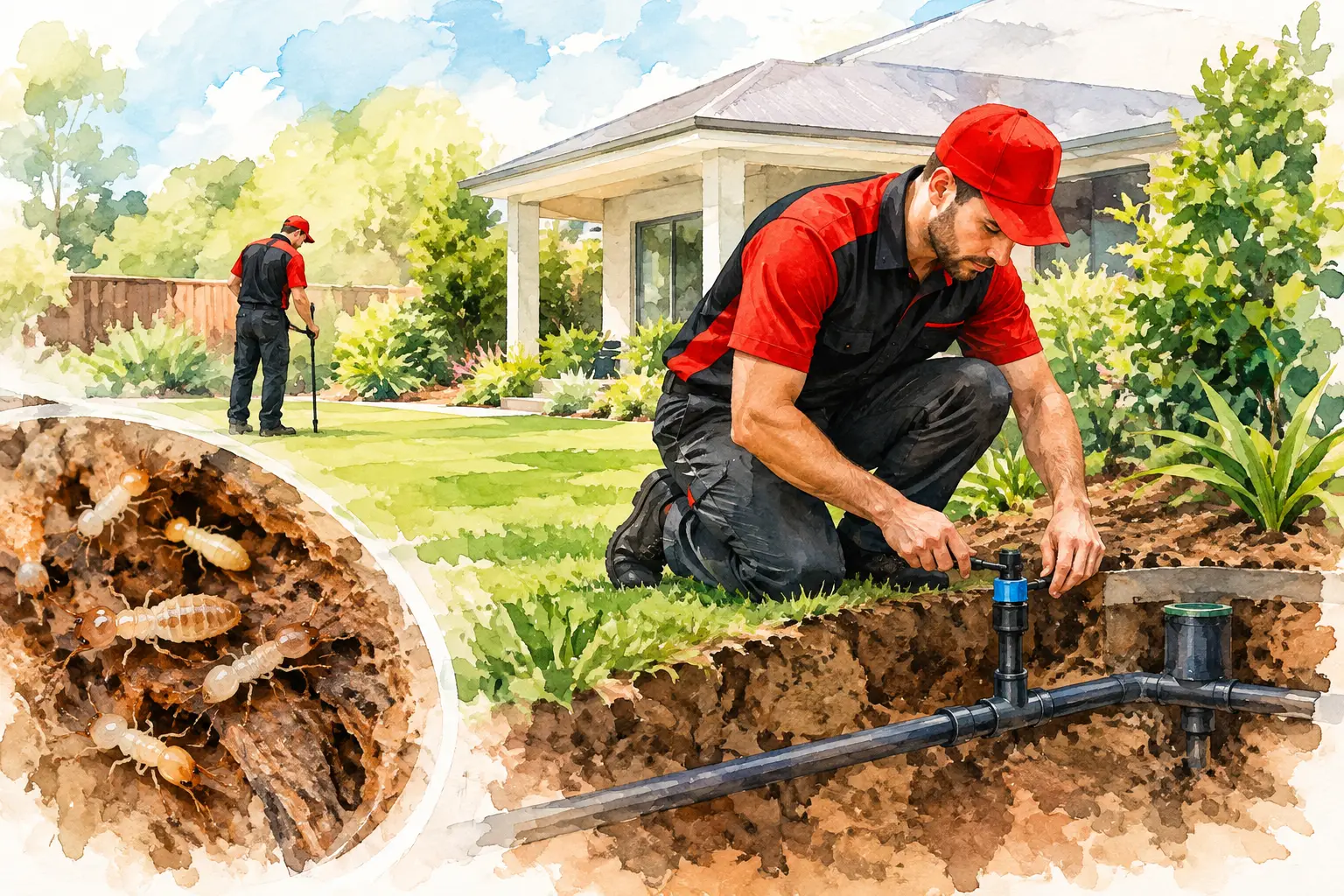

A Termguard Refill Rouse Hill / Box Hill / Kellyville service is not simply a matter of adding chemical to a pipe. Your reticulation system needs to deliver the right volume of termiticide through its emitter lines, creating a treated soil zone where termites are most likely to approach the home. If that barrier has expired, been damaged, or was never recharged after construction, the property may have a serious gap in its termite defense.
When should a Termguard system be refilled?
Termguard is a chemical reticulation system commonly installed around slab edges, service penetrations, and sometimes within wall cavities during construction. It provides a practical way to replenish a termite chemical barrier without extensive digging around the house.
Refill timing depends on the product previously used, the installation layout, soil conditions, and the chemical label period. Many properties require a professional review every few years, but a system should also be assessed earlier after landscaping changes, drainage work, renovations, plumbing repairs, or evidence of termite activity.
Practical advice
Do not assume a visible refill point means the system is still protecting your home. A technician should identify the system, test access points where appropriate, inspect for damage, and confirm whether refilling is suitable before chemical is applied.
Why local Termguard refills need a site inspection
Rouse Hill, Box Hill, and Kellyville include established homes, fast-growing estates, and properties where gardens and outdoor areas have changed significantly since handover. Raised garden beds, paving, retaining walls, stormwater alterations, and new decks can bridge or disrupt the inspection zone around a slab.
A refill restores treatment only where the reticulation lines can distribute it. It cannot correct broken pipework, blocked emitters, concealed slab edges, or termite entry points outside the original design. That is why a refill should be paired with a visual termite inspection of accessible subfloors, weep holes, slab perimeters, roof voids, and moisture-prone areas. Learn more about a professional termite inspection before relying on any existing barrier.
Warning signs that should not wait for a routine refill
Arrange an assessment promptly if you find mud tubes on brickwork or piers, blistering paint, hollow-sounding timber, tight doors or windows, unexplained moisture, or flying termites indoors. These signs do not prove the Termguard system has failed, but they do mean the property needs investigation rather than a blind recharge.
| Situation | Best next step |
|---|---|
| Known system, barrier due for renewal | Inspect the property and recharge the tested Termguard network if suitable. |
| Refill points are damaged, buried, or inaccessible | Assess repairs, access restoration, or an alternative chemical soil treatment. |
| Live termite activity or suspected damage | Treat active termites first, then design ongoing barrier or bait protection. |
What happens during a Termguard refill?
TERMITE HELP first confirms the installed system and its accessible ports. We inspect the perimeter for conditions that may reduce protection, then assess whether the network can be recharged as intended. Where suitable, a measured volume of approved termiticide is introduced through the reticulation system to replenish the treated zone around the structure.
You should receive clear service details for your records, including the treatment area, product information, and recommendations for the next inspection or refill review. If the system cannot provide reliable coverage, we will explain practical options such as localized termite treatment, repairs, monitoring, or baiting rather than treating a refill as a complete answer.
Protect the barrier between services
Keep weep holes and slab edges visible where possible, direct water away from the building, and avoid piling mulch or soil against external walls. Before building a deck, adding a planter, or installing paving, consider how the work will affect termite inspection access and existing reticulation points.
For buyers, a visible Termguard cap is useful information, not a substitute for due diligence. Request service history, confirm the system is serviceable, and arrange an independent inspection before settlement. A maintained reticulation system can be a valuable layer of protection, but it works best as part of an ongoing plan.
Practical advice
If termites remain active after treatment, TERMITE HELP will return and re-treat at no charge. Early reporting helps us respond before termite activity can cause further concealed damage.
If your Termguard system is due, uncertain, or affected by recent property work, book an inspection-led refill assessment. A clear view of your barrier now is far less costly than discovering a termite pathway after the damage is done.