A Catherine Field Termguard Refill: When to Book decision should not be based on a visible termite problem. A Termguard system is designed to maintain a chemical soil barrier around your home, but its protection depends on the system being accessible, intact, and refilled at the right interval for the product used. Waiting until mud tubes appear can turn a planned maintenance visit into a much larger termite treatment issue.
Homes around Catherine Field often sit close to developing land, landscaped yards, retaining walls, garden beds, and moisture-prone service areas. These conditions do not automatically cause termites, but they can create concealed pathways toward a building. Booking a professional system check before the barrier is due, or when you are unsure of its history, is a sensible way to protect a major asset.
When should you book a Termguard refill in Catherine Field?
The best time to book is before the protection period for the installed termiticide has expired. Your refill interval is not set by the Termguard piping alone. It is determined by the chemical originally applied, the label directions, the installation paperwork, local soil conditions, and whether changes around the home have affected the barrier.
Many homeowners first book a refill when their builder’s documents mention a replenishable reticulation system. That is a useful starting point, but do not assume a system remains effective indefinitely because the refill points are still visible. A qualified technician needs to identify the system, assess the emitter lines and valves, review available service records, and confirm the most appropriate maintenance timing.
Book sooner if you have bought a home and cannot confirm the last refill date. The same applies after major landscaping, excavation, drainage work, a new patio, plumbing repairs, or additions that may have disturbed treated soil or covered access points. If you are preparing to sell, a current termite inspection and clear service record can also give buyers more confidence.
Practical advice
Keep your Termguard service certificate, refill receipts, and any construction termite-protection documents together. They help a technician establish what was installed and avoid guesswork about your barrier’s maintenance schedule.
How a Termguard refill protects the home
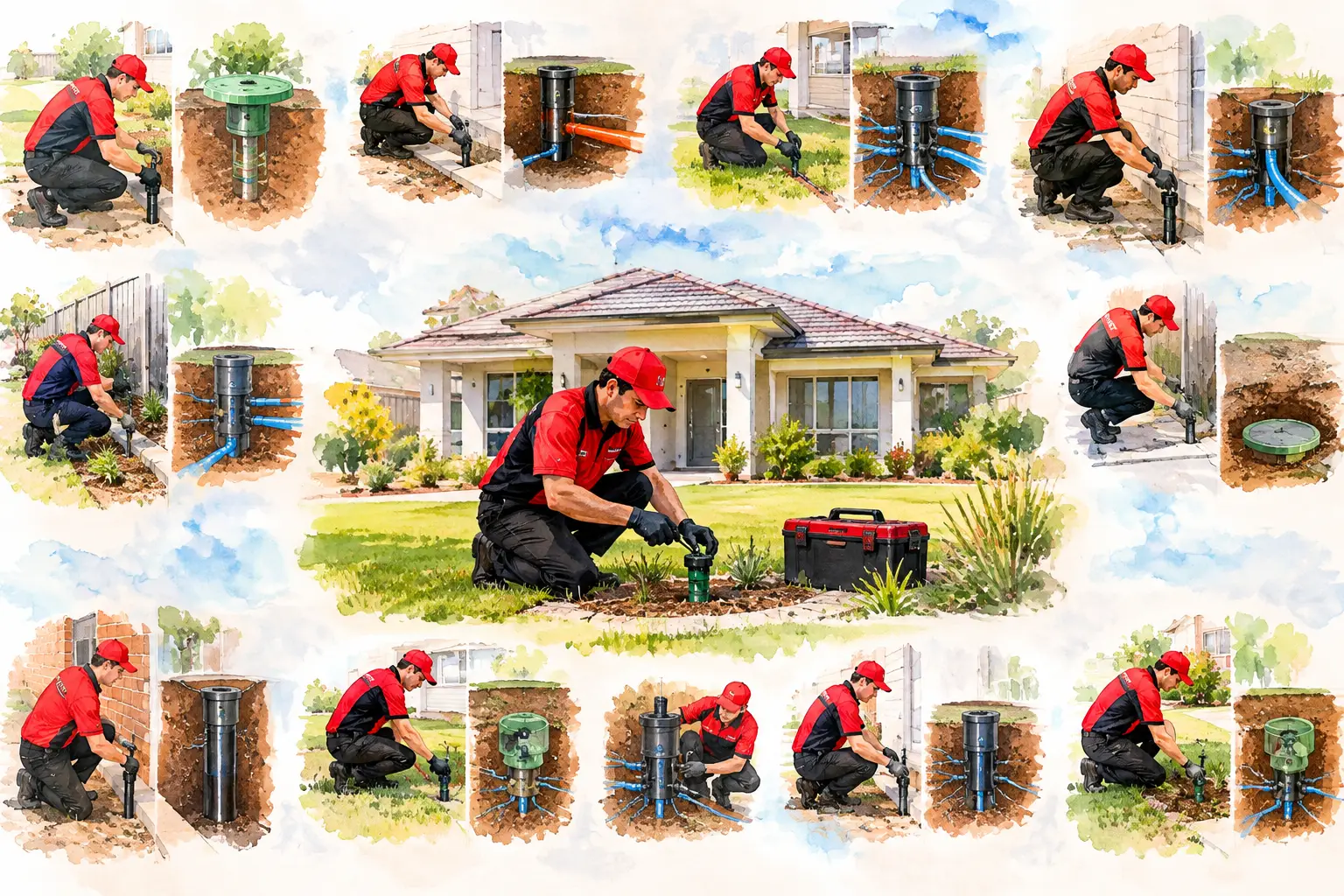
Termguard is a reticulation system installed around the perimeter of a building, usually during construction. It uses distribution pipework and emitter points to deliver an approved termiticide into the soil zone around the structure. The aim is to create and maintain a treated zone that termites must encounter as they travel from the ground toward concealed entry points.
Modern non-repellent termite chemicals are commonly selected because termites cannot readily detect and avoid them. However, the chemical choice must suit the installation, label requirements, and site assessment. A refill is therefore more than pumping product into a pipe. It is a controlled application that should account for the home’s construction, soil contact, access, and any signs of termite activity.
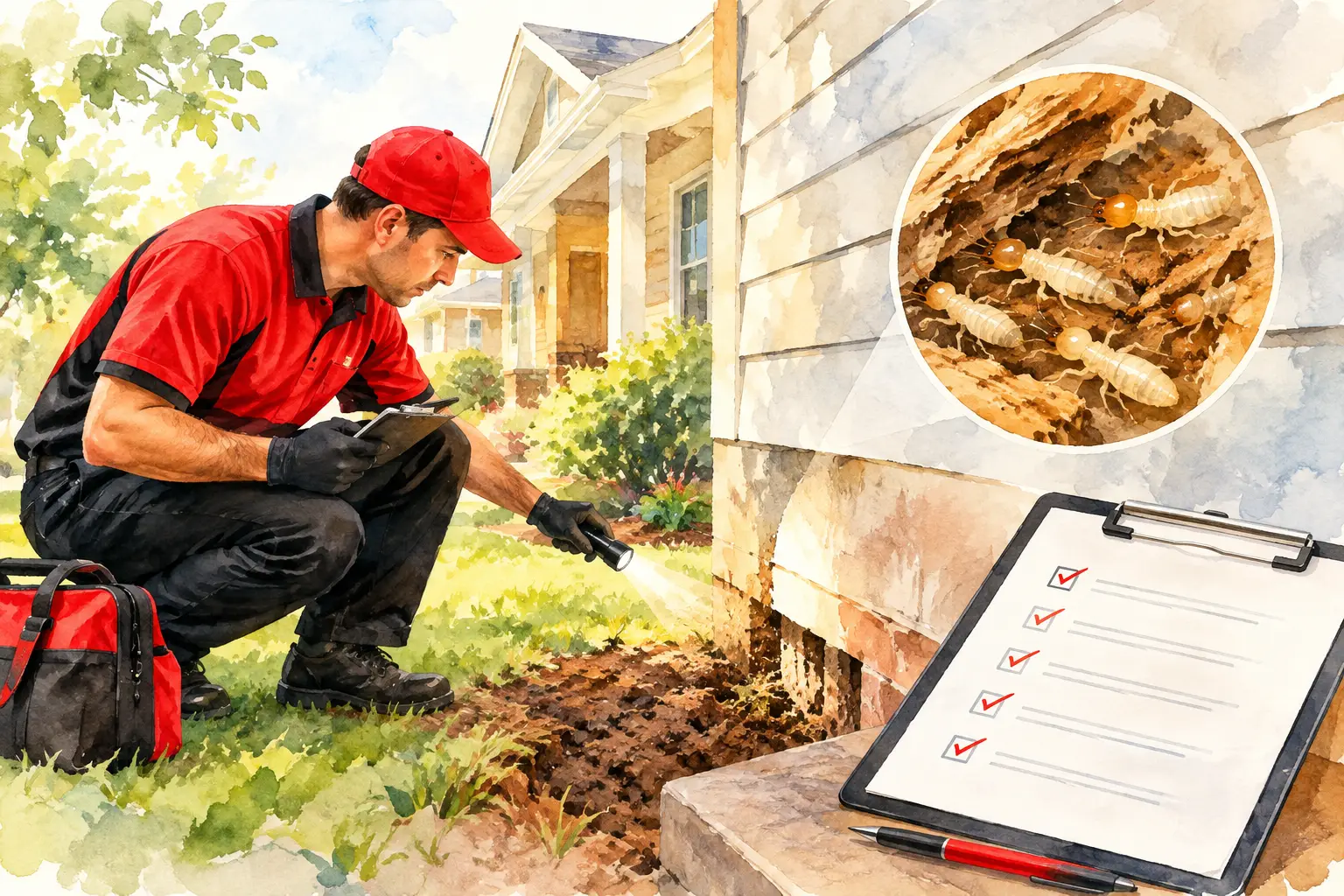
At TERMITE HELP, a refill visit can include checking refill caps, emitter valves, exposed lines, and areas where paving or gardens may restrict access. If the system has been damaged, blocked, altered, or cannot adequately protect a changed section of the property, repair work or a supplementary treatment may be recommended.
Do not confuse a refill with a termite inspection
A Termguard recharge maintains the chemical barrier. A termite inspection looks for evidence that termites have found another route into the building. Both matter because subterranean termites can enter through gaps around pipes, slab edges, expansion joints, wall cavities, and concealed timber connections.
Australian homes with reticulation systems should still receive regular professional inspections. A barrier reduces risk, but it does not make a property termite-proof. Inspections assess the accessible interior, exterior, roof void where available, subfloor, garden-side walls, and high-risk moisture areas. Thermal technology, moisture detection, and targeted investigation may help when there is reason to look closer.
For a separate assessment of your home, see our termite inspection service. If live termites or damage are found, the response may involve localized treatment, baiting, a soil treatment, or a combination designed around the colony activity and construction details.
Warning signs that should move your booking forward
Do not wait for your next planned refill if something around the home has changed. Termites work from hidden areas, and early signs can be easy to dismiss as ordinary building movement or moisture damage.
- Mud tubes on external walls, piers, foundation edges, timber, or inside a garage.
- Soft, hollow-sounding, blistered, or unexpectedly damaged timber and skirting boards.
- Persistent dampness near bathrooms, laundries, hot-water systems, air-conditioning drains, or downpipes.
- Cracked grout, lifted paving, new garden beds, or construction work that may have bridged or disturbed the treated zone.
- Missing, broken, buried, or inaccessible Termguard refill points.
Do not spray visible termites with a household insecticide or pull apart damaged timber before an inspection. Disturbing active termites can cause them to retreat and establish a more difficult-to-locate entry route. Arrange professional advice promptly instead.
Termguard refill, repair, or another treatment?
The right service depends on what is found. A system with clear records, sound pipework, and no activity may simply need its scheduled recharge and inspection. A property with damaged lines or inaccessible outlets may need reticulation repair before refill. Where termites are active, the priority is to address the infestation, then restore long-term protection.
| Service | Best suited to | What it addresses |
|---|---|---|
| Termguard refill | An intact, due-for-service reticulation system | Maintains the chemical soil barrier |
| System repair | Broken outlets, pipework, or poor access | Restores practical refill capability |
| Baiting or targeted treatment | Confirmed activity or difficult entry areas | Manages termites and supports colony control |
| Supplementary soil treatment | Altered landscaping or unprotected sections | Strengthens protection where needed |
What happens during a professional refill visit?
A technician begins by locating and identifying the installed system. Service records are reviewed where available, then accessible refill points and perimeter conditions are checked. The technician will also look for obvious conditions that could compromise protection, such as soil or mulch bridging the slab edge, drainage leaks, timber stored against the home, or recent alterations.
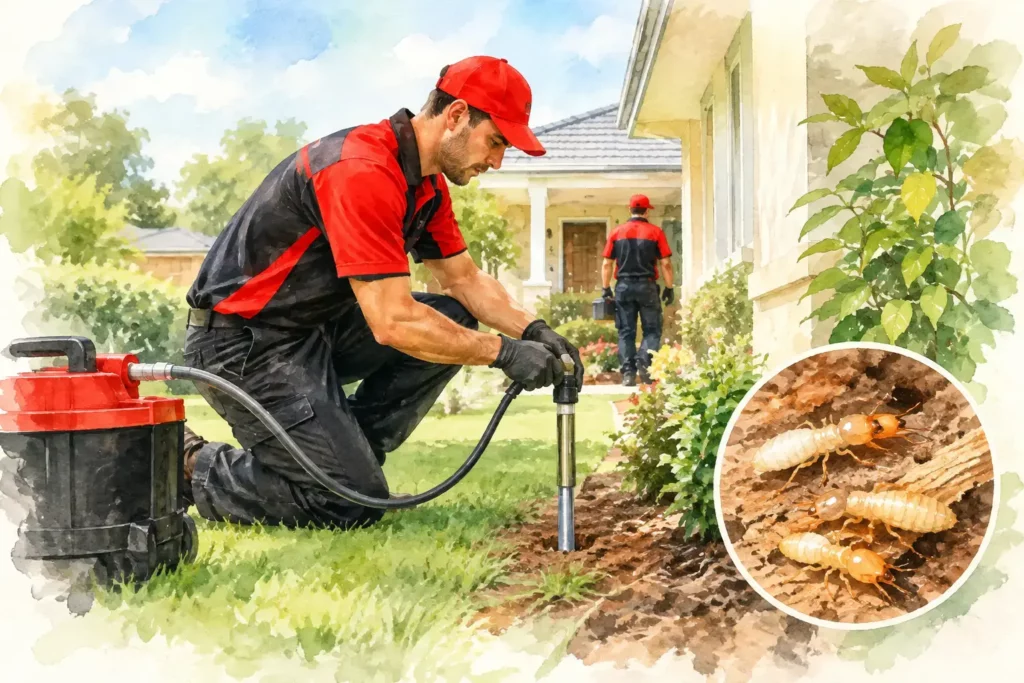
Once the system is assessed, the appropriate approved termiticide can be introduced through the designated refill points in line with product directions. You should receive clear information about what was found, what work was completed, and when the next inspection or maintenance review is recommended. If ongoing termite activity is discovered after treatment, TERMITE HELP returns to re-treat at no additional charge under its applicable service commitment.
For homes with activity, learn more about our termite treatment options. For new homes, extensions, and construction projects, early planning for pre-construction termite protection can preserve access to barriers before concrete, paving, and landscaping are complete.
Book before the barrier becomes an unknown
A Catherine Field Termguard system is valuable because it gives your home a maintainable line of defense. Its value drops when service dates are forgotten, outlets disappear under landscaping, or an inspection is delayed after warning signs emerge. A prompt assessment gives you a documented plan rather than uncertainty around one of the most expensive risks a homeowner can face.
Protecting a home is easier when the barrier, inspection schedule, and site conditions are all working together – not when you are reacting to damage already hidden behind a wall.