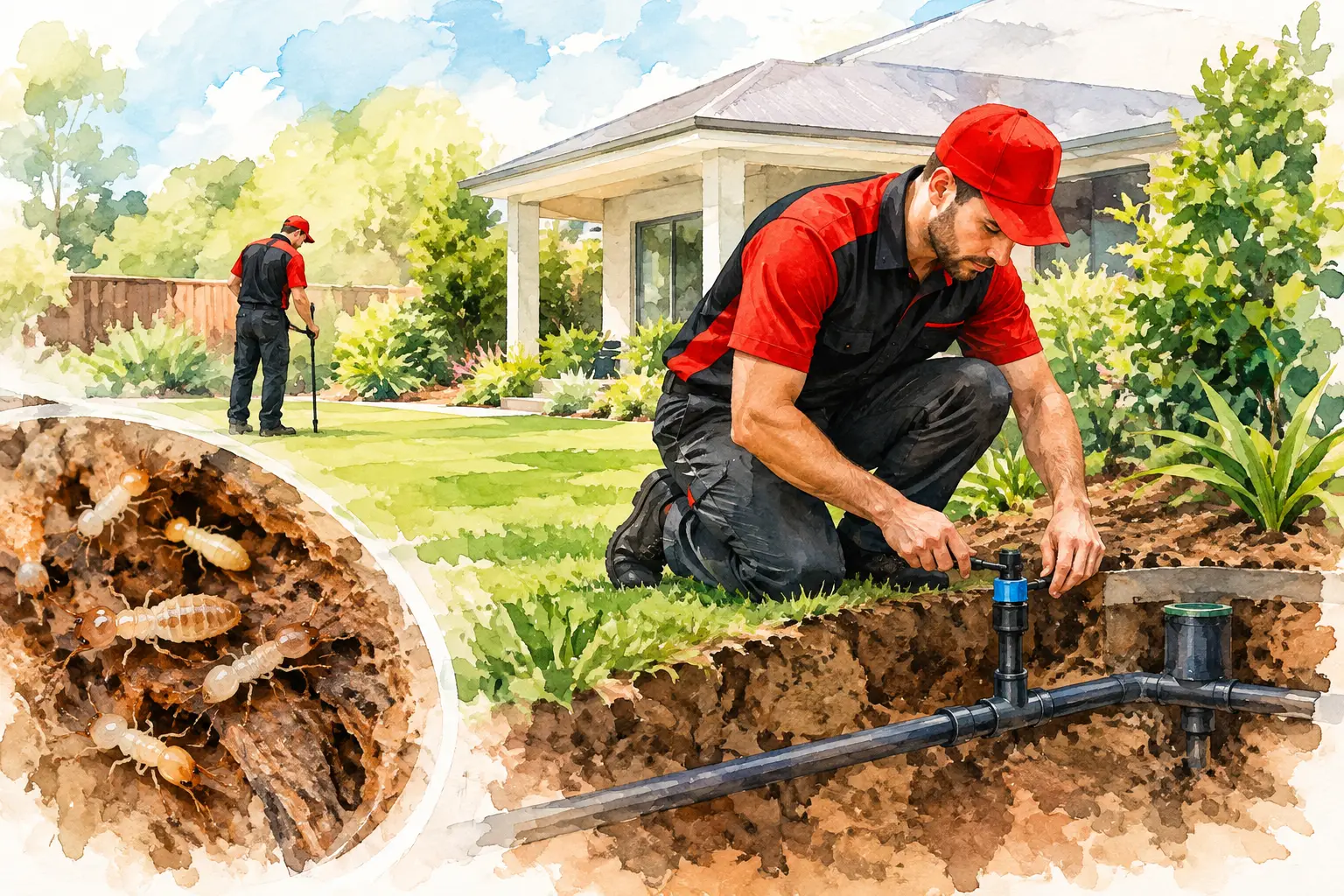

For homes on the growing residential fringe, a Termguard Refill Leppington / Austral / Catherine Field service is not simply a maintenance job. It is the process that restores the chemical zone designed to protect concealed entry points around your slab, plumbing penetrations, and perimeter. As new estates continue to develop around these suburbs, retaining access to a working termite management system is a sensible way to protect a major property investment.
How a Termguard refill protects your home
Termguard is a chemical reticulation system installed during construction or later works. It uses concealed pipework and outlet points to distribute an approved termiticide into the soil where termites are most likely to travel. Rather than digging extensively around the home at each service, a technician can inspect the system and replenish the barrier through its designated access points.
The pipework is only one part of the protection. The chemical treatment within the soil has a service life, which varies with the product used, site conditions, drainage, landscaping changes, and the original installation. A refill should therefore be based on the system documentation, previous treatment records, and a professional assessment, not a guess based solely on the home’s age.
Practical advice
Keep Termguard emitter caps and refill points visible and accessible. Avoid covering them with soil, paving, garden beds, decking, or stored materials. If access has been buried or damaged, it can often be located and repaired before a refill is carried out.
When should Leppington, Austral and Catherine Field homes be refilled?
There is no single refill interval that suits every property. Your service record should identify the chemical used and its expected replenishment period. A homeowner may need a refill sooner where excavation, new drainage, landscaping, additions, or plumbing work has disturbed treated soil or damaged the reticulation line.
An annual termite inspection remains essential even where a barrier is active. Termites can find untreated gaps, bridge barriers through landscaping or debris, and enter through areas outside the original treatment zone. An inspection looks for activity, conditions that encourage termites, and changes that may reduce the barrier’s effectiveness.
Signs your system needs attention
Call for an assessment if an emitter valve is missing, cracked, blocked, or covered; if building work has occurred near the slab; or if you cannot find records showing when the barrier was last replenished. Mud tubes, hollow-sounding timber, bubbling paint, tight doors, or unexplained moisture are more urgent warning signs. These symptoms warrant a prompt inspection rather than waiting for a scheduled refill.
| Service | Best suited to | What it addresses |
|---|---|---|
| Termguard refill | An intact, accessible reticulation system | Replenishes the designated chemical barrier |
| System repair | Damaged, buried, leaking, or inaccessible components | Restores access and helps the system distribute treatment as intended |
| Targeted treatment or baiting | Confirmed activity or areas beyond the treated zone | Responds to termite activity and site-specific risk |
What happens during a Termguard refill service?
A proper visit begins with identifying the system brand, checking accessible emitters and reviewing any available paperwork. The technician assesses whether refill points are serviceable, whether site changes have compromised protection, and whether termite activity or moisture concerns require a broader response.
If the system is suitable, the appropriate treatment is introduced through the reticulation network in accordance with the system design and label directions. You should receive clear treatment details and recommendations for future inspection and replenishment. Where a refill alone is not enough, options may include repairs, a localized chemical soil treatment, wall-cavity protection, or a monitored baiting program.
For buyers, do not assume a visible emitter cap means the system is current. Request the installation certificate, refill history, and an independent timber pest inspection before relying on an existing barrier. This is particularly worthwhile for properties that have changed hands, been extended, or had landscaping upgraded.
Practical advice
Do not disturb suspected termite leads or spray them with household chemicals. Disturbing activity can make termites relocate and harder to trace. Arrange a professional assessment so the response can be planned around the extent of activity and the existing barrier.
Protecting a home in Leppington, Austral, or Catherine Field is about maintaining layers of defense: an inspected structure, a serviceable Termguard system, sensible moisture control, and treatment that matches the conditions found on site.