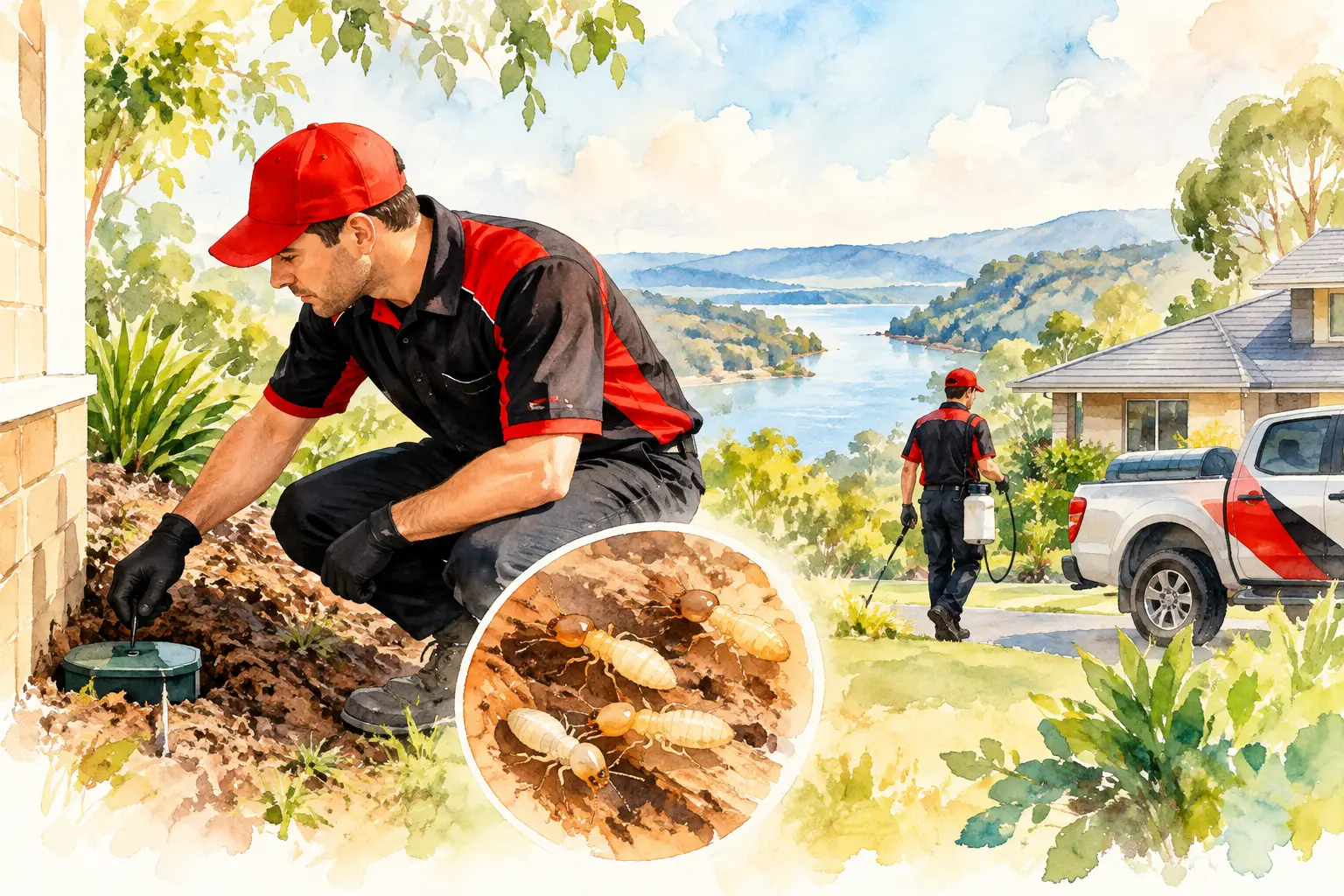

If you are searching for Termguard Refill Middleton Grange / West Hoxton / Carnes Hill, do not treat it as a simple top-up. Your reticulation system is designed to deliver termite treatment into the soil around and beneath key parts of the home. A professional refill should confirm the system is accessible, intact, and capable of maintaining a continuous chemical barrier where termites are most likely to travel.
Why a Termguard refill matters in South West Sydney
Homes in Middleton Grange, West Hoxton, and Carnes Hill often sit in growing residential areas where landscaping, garden irrigation, paving, and building alterations can change the conditions around a slab. Subterranean termites need moisture, concealed access, and timber food sources. They can travel through soil and enter through small construction gaps, service penetrations, and concealed wall areas.
A Termguard system allows a licensed technician to introduce approved termiticide through installed pipework and emitter points. This is less disruptive than excavating the entire perimeter, but the result depends on the condition and layout of the original system. A refill without checking the system may leave sections untreated if a line has been damaged, capped over, blocked, or made inaccessible by concrete and garden works.
TERMITE HELP assesses the system before recharging it and can recommend a broader protection plan where the property has elevated risk or evidence of termite activity. A refill works best alongside regular termite inspections, because a chemical barrier reduces risk but does not make a home immune to termites.
When should a Termguard system be recharged?
Refill timing depends on the product used, the original installation records, soil conditions, and whether work around the home has disturbed the treated zone. Many systems require replenishment on a scheduled basis, but the correct interval must be confirmed from the system details and treatment label rather than guessed.
A technician should inspect sooner if you have purchased a home with an existing system and no service history, completed an extension, installed paving or a pool, changed drainage, or noticed moisture problems around the slab. These changes can affect both termite pressure and access to emitter points.
Practical advice
Keep emitter caps visible where possible. Before booking a refill, avoid covering ports with soil, mulch, decking, or permanent landscaping. Clear access helps the technician test and recharge every available section of the system.
Signs your Termguard protection needs attention
A missing refill date is reason enough to arrange an assessment, especially if the home is due for its routine inspection. There are also warning signs that require faster action. Mud shelter tubes on brickwork, piers, plumbing lines, or garage walls can indicate active termite travel. Soft or hollow-sounding timber, bubbling paint, buckling trim, and tight doors can also be signs of concealed damage.
Do not disturb mud tubes or spray suspected activity with hardware-store insecticide. That can cause termites to retreat and reappear elsewhere, making the colony harder to locate and treat. Arrange a specialist assessment and retain any visible evidence for the inspection.
Termguard refill, repair, or treatment: what does your home need?
A refill is appropriate when the reticulation lines are serviceable and the objective is to renew the soil barrier. If the system has faults or termites are already active, additional work may be required.
| Service | Best suited to | What it addresses |
|---|---|---|
| Termguard refill | An intact, accessible system due for renewal | Replenishes the chemical barrier through pipework |
| System repair | Blocked, broken, buried, or altered reticulation lines | Restores access and treatment coverage where practical |
| Active termite treatment | Confirmed termite activity or damage concerns | Targets the infestation and supports long-term prevention |
Where termites are found, a refill alone may not be the right response. Depending on access and colony behavior, treatment can involve non-repellent soil treatment, targeted wall-cavity work, or a monitored termite baiting system. The best option depends on the construction of the home, where activity is located, and whether the existing barrier can be maintained.
Protect the barrier between services
Good maintenance supports the value of a Termguard refill. Keep garden beds below weep holes, direct air-conditioner discharge and downpipes away from the slab, repair plumbing leaks promptly, and avoid storing timber or cardboard against exterior walls. These measures do not replace treatment, but they reduce moisture and concealed entry opportunities.
Practical advice
Ask for clear service records after your refill. They should identify the system checked, treatment applied, accessible areas, limitations, and recommended date for the next inspection or recharge.
For homeowners buying in the area, request the Termguard documentation during the purchase process and book an independent inspection before relying on an old treatment label. A barrier is valuable only when its history and current condition are understood.
A timely system assessment gives you a clear answer before small access issues or missed refill intervals become a larger termite risk.