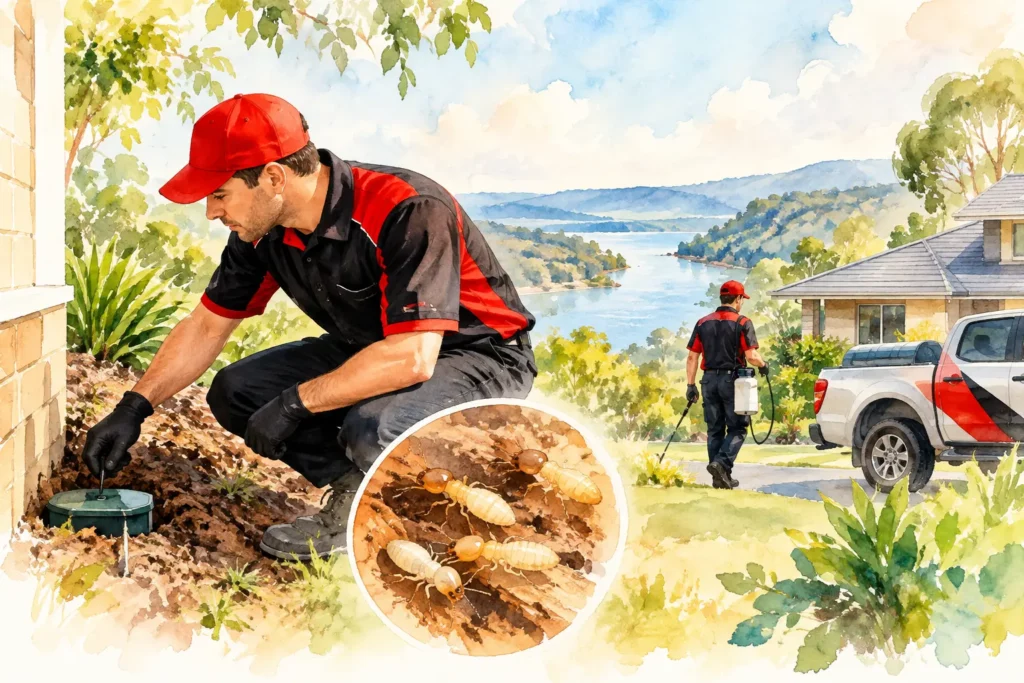
A Termguard Refill Silverdale / Warragamba / Wallacia service is not simply a matter of pumping chemical into a pipe. It is a critical check of the replenishable barrier protecting the soil around your home, including whether the system is accessible, intact, and delivering product where termites could gain concealed entry.
Homes in Silverdale, Warragamba, and Wallacia can sit close to bushland, established gardens, retaining walls, and timber features. Those conditions do not cause termites on their own, but they can create moisture and concealed pathways that make regular barrier maintenance a sensible part of protecting a major asset.
How a Termguard refill protects your home
Termguard is a chemical reticulation system installed around a building perimeter, and sometimes beneath slabs or in wall-cavity zones. Its pipe network allows a licensed technician to replenish a termiticide barrier without extensive digging. The chemical is distributed through purpose-designed outlets in the pipe rather than sprayed randomly around the property.
A properly serviced system can provide a continuous treatment zone in vulnerable soil areas. However, the pipes are only one part of termite protection. Landscaping changes, drainage faults, additions to the home, and termite activity can all alter the risk. That is why a refill should be paired with a professional assessment, not treated as a set-and-forget job.
For a broader assessment of accessible areas, moisture risks, and termite evidence, arrange a termite inspection alongside your system service.
Practical advice
Keep the Termguard refill point visible and accessible. Do not cover it with soil, paving, mulch, or stored items. If you cannot locate the valve box, avoid digging blindly around the slab edge and have the system traced by a termite professional.
When should Termguard be refilled?
The correct refill interval depends on the active chemical, the system design, soil conditions, and the product label. Many chemical barriers need reassessment and replenishment at intervals specified by the treatment product, but a technician should confirm the actual service history before recommending a refill date.
A property may need attention sooner if there has been excavation, drainage work, a new deck, garden-bed changes, plumbing leaks, or building alterations. These can disturb treated soil or create an untreated route around the barrier. A refill may also be unsuitable until damaged pipes, blocked lines, or inaccessible valves are repaired.
| Situation | Recommended response |
|---|---|
| Scheduled barrier maintenance is due | Check the prior treatment record, inspect the system, then refill with an appropriate registered product. |
| Valves are buried, cracked, or missing | Locate and repair the access point before attempting to recharge the reticulation line. |
| Mud tubes, damaged timber, or live termites are found | Treat active termites first, then review the barrier and monitoring plan. |
Warning signs that should not wait for a refill
A chemical barrier is preventative, not a reason to ignore possible activity. Book an inspection promptly if you find pencil-thin mud tubes on brickwork, piers, or subfloor timber; hollow-sounding wood; tight-fitting doors or windows; blistered paint; or unexplained moisture near walls.
Termites can travel behind linings and through wall cavities without obvious external damage. If activity is confirmed, the best solution may involve targeted treatment, baiting, or localized wall-cavity work in addition to a Termguard service. TERMITE HELP can assess whether a termite treatment program is needed before the reticulation system is returned to its long-term prevention role.
What happens during a Termguard refill service?
A careful service begins by identifying the refill points and checking that the system is suitable for recharge. The technician assesses accessible slab edges, construction joints, damp areas, and changes around the property that may affect the barrier. The selected termiticide is then introduced through the system at the required rate, with records retained for future maintenance planning.
If ongoing termite activity persists after treatment, a responsive protection program should include return visits and re-treatment where required, rather than leaving the homeowner to manage the problem alone. Your service report should clearly explain the work completed, the product used, limitations of accessible inspection areas, and the next recommended inspection or refill timeframe.
If your Silverdale, Warragamba, or Wallacia home has a Termguard system, protect its value with a documented inspection and refill plan before an unseen termite pathway becomes costly damage.