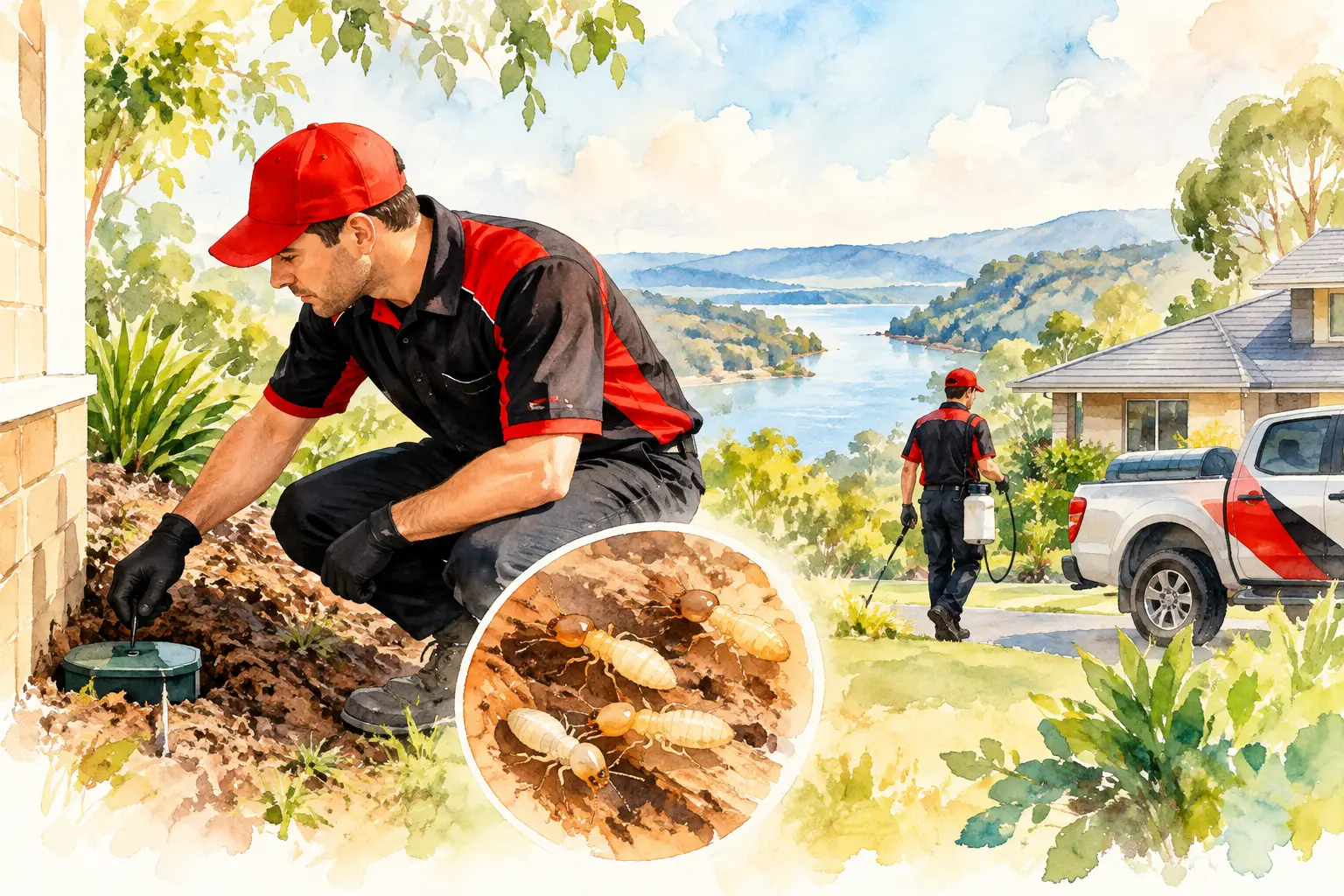

A Termguard Refill Kemps Creek / Luddenham / Horsley Park service is not simply a matter of adding chemical to a pipe network. It is a chance to confirm that the reticulation system still delivers an even protective barrier around your home, especially where landscaping, drainage changes, paving, or construction work may have affected the soil.
Homes across Kemps Creek, Luddenham, and Horsley Park often sit on larger blocks with garden beds, timber landscaping, outbuildings, and variable drainage conditions. Those features can create concealed termite entry points. A maintained chemical barrier provides valuable protection, but it needs professional inspection and replenishment at the right time.
How a Termguard refill protects your home
Termguard is a chemical reticulation system installed around a building perimeter and, in some homes, beneath slab edges or near selected risk areas. During a refill, a technician accesses the system’s charging points and introduces the approved termiticide through the pipework. The chemical disperses through emitter holes into the surrounding soil, forming a treated zone termites must pass through before reaching concealed structural timbers.
Modern non-repellent products are often selected because termites cannot readily detect and avoid them. The right product, concentration, and volume depend on the original system design, accessible pipe runs, soil conditions, and the label directions for the product being used. That is why a refill should never be treated as a one-size-fits-all top-up.
For broader property protection, arrange regular termite inspections alongside barrier servicing. Reticulation is an important defense, but it does not make a home termite-proof.
Practical advice
Keep refill points visible and accessible. Avoid burying caps under mulch, concrete, pavers, or dense garden growth. If a cap has been covered or damaged, tell your technician before the appointment so the system can be assessed properly.
When should Termguard be refilled in Kemps Creek, Luddenham, or Horsley Park?
The correct refill interval depends on the chemical previously installed, local conditions, and the product label. Many liquid termite barriers are planned on a multi-year cycle, but homeowners should not rely on a calendar reminder alone. A system may need earlier attention after excavation, drainage work, replacement paving, plumbing repairs, landscaping, or any work that disturbs treated soil.
If you have purchased a home, ask for the Termguard installation certificate and prior treatment records. If records are missing, a professional assessment can identify visible components, test access to the pipework where appropriate, and recommend whether a refill, repair, inspection, or another termite treatment approach is more suitable.
Signs that your barrier needs prompt attention
A missing or cracked refill cap, crushed pipe, unexplained wet areas near the perimeter, or recent trenching can compromise a reticulation system. More urgent warning signs include mud shelter tubes on walls or piers, hollow-sounding timber, tight doors or windows, bubbling paint, and fine mud packed into timber joints. These signs do not automatically confirm active termites, but they justify a detailed inspection without delay.
| Situation | Recommended response |
|---|---|
| Barrier is due under its documented service schedule | Inspect the system, confirm access points, and refill with the appropriate registered termiticide. |
| Paving, garden work, or excavation has disturbed the perimeter | Assess the affected section for barrier breaks, pipe damage, and untreated soil. |
| Termite activity or mud leads are found | Arrange an urgent inspection and tailored treatment plan before relying on a routine refill. |
Refill, repair, or a different termite treatment?
A refill is appropriate when the Termguard network is intact, accessible, and capable of distributing chemical as designed. If pipes are blocked, cut during building work, or inaccessible beneath hard landscaping, repair work may be needed first. In some cases, localized soil treatment, wall-cavity treatment, monitoring, or baiting is a better response to the risk found on site.
TERMITE HELP assesses the whole protection picture rather than assuming every property needs the same service. That includes the barrier condition, drainage, timber-to-soil contact, subfloor ventilation, garden layout, and evidence of termite pressure. If activity persists after service, the team will return and re-treat at no charge under the applicable service program.
Protect the barrier between scheduled services
Keep soil and mulch below weep holes, direct roof water away from the building, and avoid storing timber, sleepers, or cardboard against exterior walls. Do not cut into the perimeter soil for new irrigation, fencing, or garden edging without considering the chemical barrier. Small changes around a home can create an untreated pathway that termites may exploit.
Whether your Termguard system is due for replenishment or you are unsure what protection is installed, a site assessment gives you a clear next step before termite damage becomes expensive structural work.