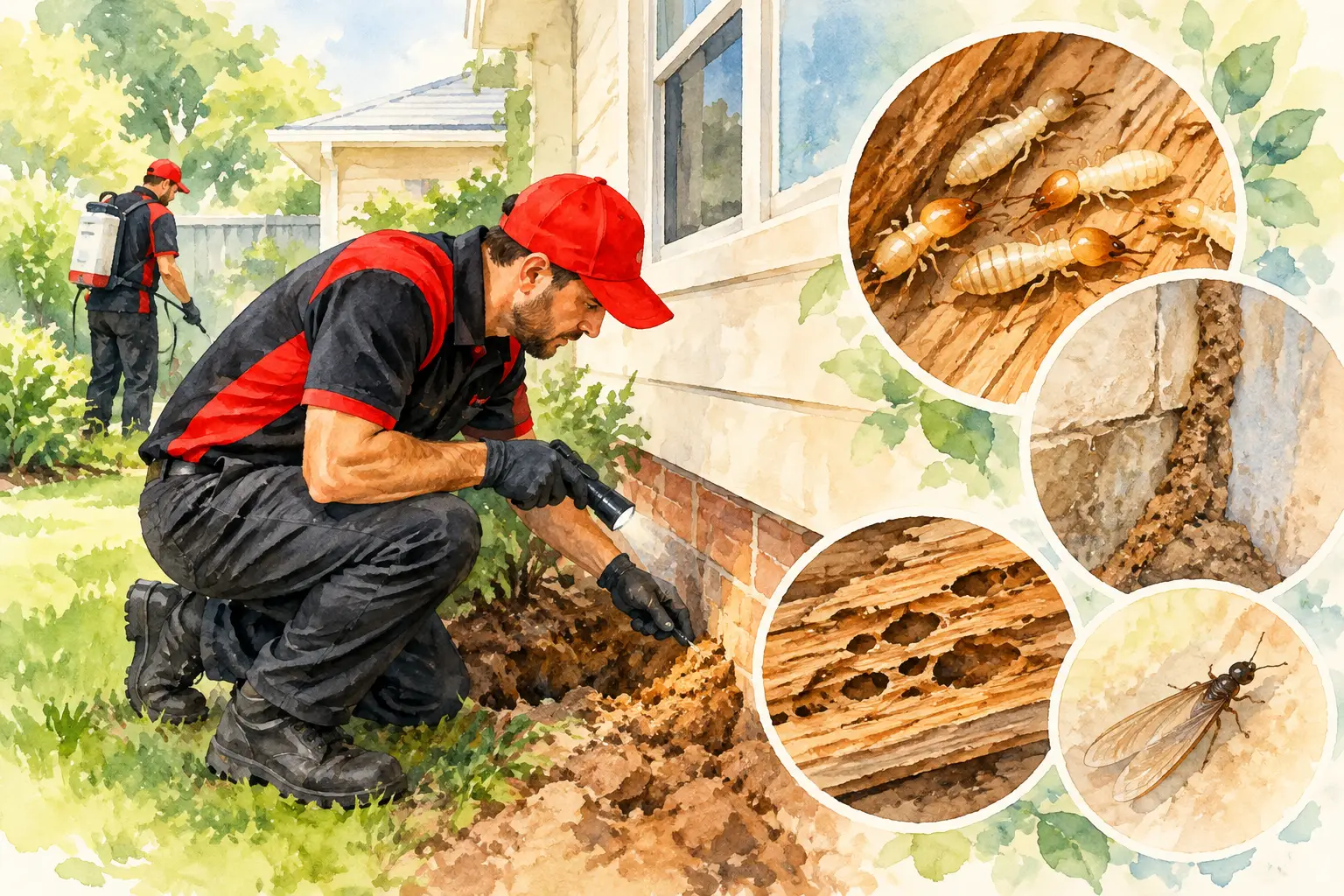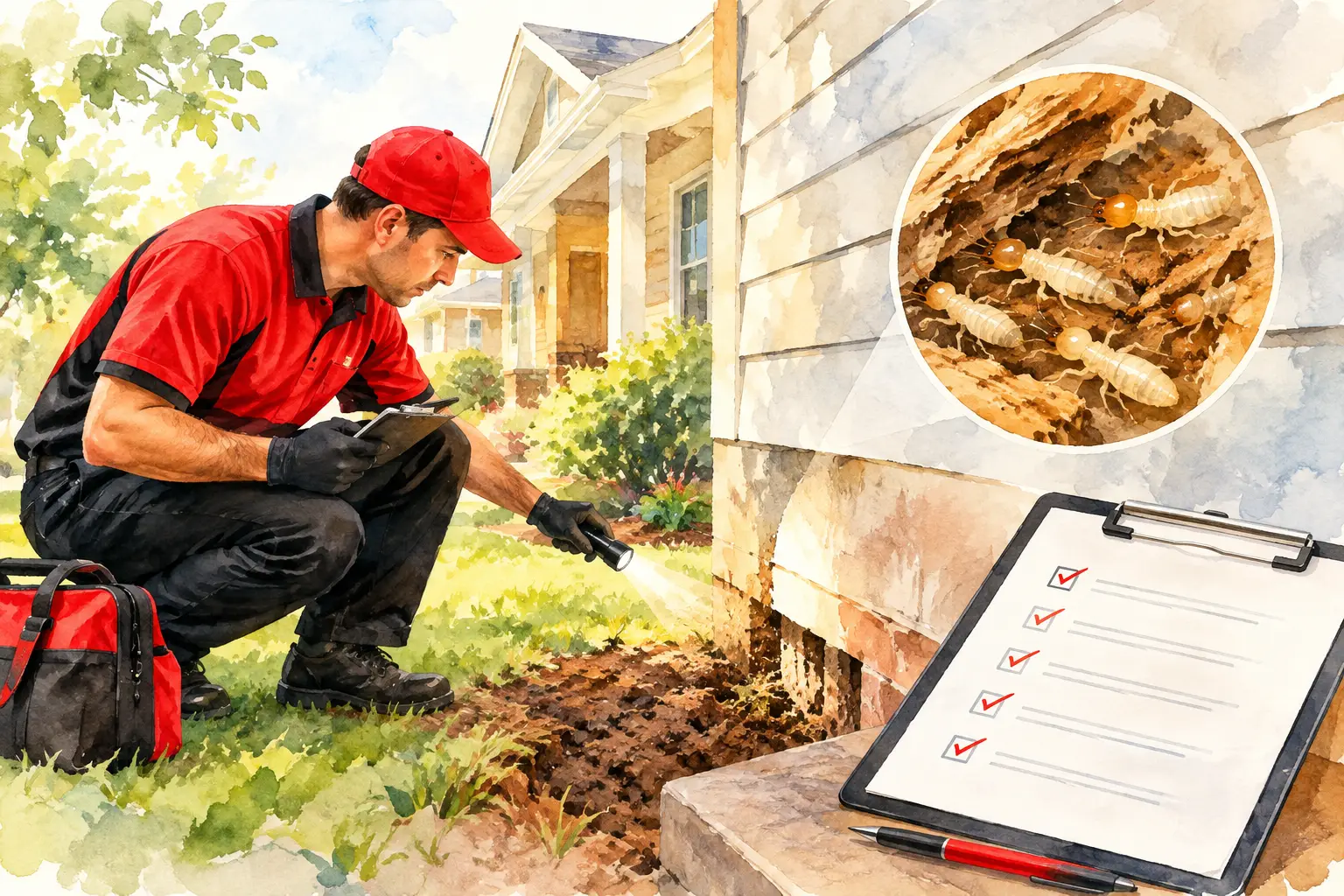
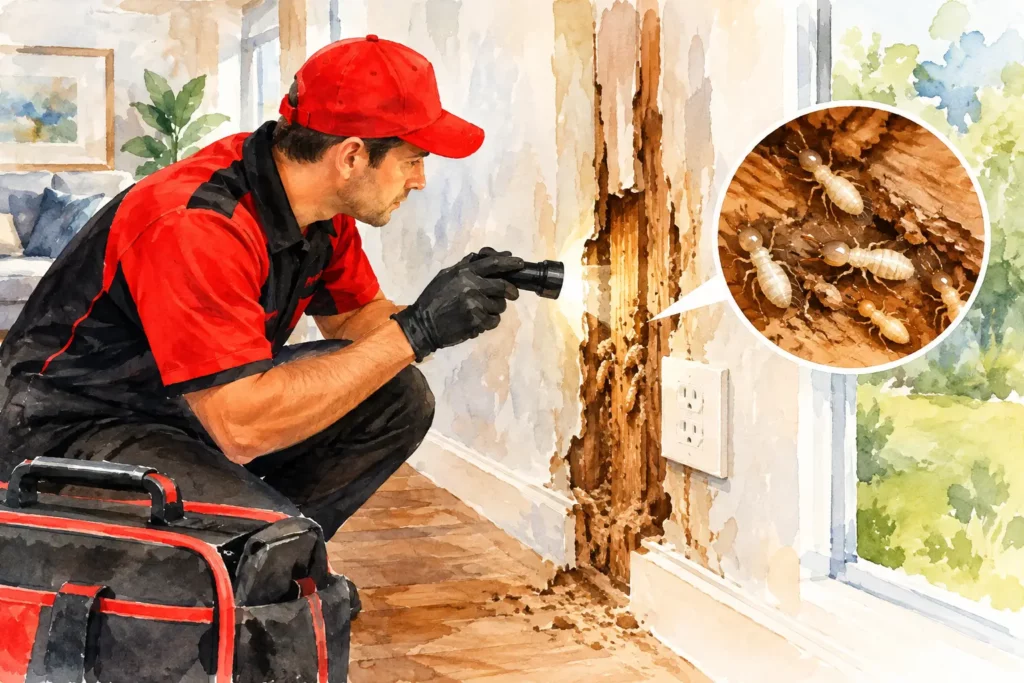
A power point is not where most homeowners expect to find termites. Yet when a cover plate is removed and you see mud, pale insects, damaged plasterboard, or hollow timber nearby, it can be a clear sign that concealed termite activity has reached a wall cavity. If you are thinking, “I found termites behind my power point,” treat it as urgent, but do not panic or start spraying.
Subterranean termites often travel inside walls where conditions are dark, humid, and protected. Electrical penetrations, plumbing openings, slab edges, and wall cavities can all provide hidden routes. The visible activity may be small, while the colony’s access to structural timber is much larger.
Why termites appear behind a power point
Termites do not eat electrical wiring, but they may travel alongside it. A power point can be positioned on a wall where termites have entered through a concealed gap at the slab, an unprotected service penetration, a garden bed against the exterior wall, or timber in contact with soil.
The cavity behind the outlet may also be warmer and more sheltered than exposed building surfaces. In homes around Castle Hill, Kellyville, Baulkham Hills, and Ryde, termite activity is often discovered after renovations, new cabling, or a simple attempt to replace a switch plate reveals mud packing or damaged timber.
The key concern is not the outlet itself. It is the possibility that termites have established a concealed route through the wall, floor frame, roof void, or subfloor.
Practical advice
Do not disturb the area, pull apart mud leads, or apply household insect spray. Take a clear photo from a safe distance, leave the power point cover in place if possible, and arrange a professional termite inspection promptly. If there is exposed wiring, heat, sparking, or electrical damage, contact a licensed electrician as well.
What to do when you find termites behind a power point
First, keep children and pets away from the location. If termites are visible, avoid opening the wall or trying to collect them. Disturbing a feeding site can cause termites to retreat and resume feeding elsewhere, making the extent of activity harder to map.
Next, look without touching. Fine brown mud tubing, packed soil around cable openings, blistered paint, bubbling skirting boards, and timber that sounds hollow when lightly tapped are all warning signs. Termites are usually pale cream in color and avoid light. If the insects are dark, winged, or moving openly around lights, they may be ants or flying termites, but the property still deserves assessment.
Then book a focused inspection. A proper investigation should not stop at the outlet. The inspector needs to assess accessible internal walls, skirting boards, the roof void, subfloor where present, exterior slab edges, garden areas, wet zones, and likely termite entry points. Read more about a thorough termite inspection before deciding that a single visible spot is the full problem.
How a professional inspection finds the hidden extent
Termite activity behind a power point can be difficult to assess visually because plasterboard conceals the route. A qualified technician may use moisture detection, thermal imaging, sounding tools, and targeted inspection methods to identify suspicious areas without unnecessary demolition.
Thermal detection can help locate temperature differences linked to termite activity or moisture, but it is not a stand-alone guarantee. Dense insulation, reflective surfaces, hot weather, and plumbing can create misleading readings. That is why thermal findings must be interpreted alongside visual evidence, moisture readings, construction details, and a full property inspection.
If activity is confirmed, the treatment decision depends on where termites are feeding, how the home is built, whether a chemical reticulation system is installed, and whether the colony can be targeted with baiting. A wall cavity may require a carefully designed localized treatment, but treating only the wall can leave the colony’s entry route untouched.
Treatment options after termites are found in a wall cavity
The right solution is based on evidence, not a one-size-fits-all spray. The table below outlines common approaches used for Sydney homes.
| Option | When it may suit | Key consideration |
|---|---|---|
| Targeted wall-cavity treatment | Confirmed activity is localized in an accessible wall area. | It should be paired with investigation of the external entry route. |
| Termite baiting and monitoring | Live termites can be intercepted and ongoing colony elimination is appropriate. | Requires scheduled monitoring and patience while the bait is accepted. |
| Chemical soil barrier | Accessible perimeter soil or specific entry points can be treated. | Coverage and continuity matter, especially around additions and paving. |
| Reticulation system refill or repair | The home has installed delivery lines such as Termguard, TermStop, TermX, Altis, or Reterm. | The system must be tested and charged to its specific design. |
Check whether your termite barrier is still working
Many newer homes have a chemical reticulation system beneath or around the slab. These systems use installed pipework and emitter valves to distribute termiticide into designated soil zones without major excavation. They are valuable, but they are not permanent fit-and-forget protection.
The refill interval depends on the chemical used, the system design, the original installation details, and the manufacturer’s label requirements. Changes around the house also matter. New paving, landscaping, extensions, drainage work, and soil levels can bridge or bypass protected zones.
If you have a Termguard, TermStop, Camilleri, Cavtech, Altis, TermX, or Reterm system, arrange a condition review after termite activity is found. A technician can identify the system, locate service points, assess for damage or blockages, and advise whether a recharge, repair, or supplementary treatment is required. Our reticulation system refill service is designed for homeowners who need system-specific protection rather than a generic perimeter spray.
Prevention after treatment: protect the wall and the property
Once active termites have been addressed, ongoing prevention is the part that protects your investment. Keep garden mulch, stored timber, and soil below weep holes and away from external wall finishes. Repair leaking taps, overflowing gutters, and drainage problems that keep soil damp near the home.
Avoid covering inspection zones with dense plants, stacked materials, or new structures. If renovation work is planned near the affected wall, tell the builder or electrician that termite activity was found. Cutting into a wall, moving a power point, or altering the slab perimeter may require the termite protection plan to be reviewed.
A follow-up inspection is particularly valuable after confirmed activity. Termites can re-enter through a different route if moisture, accessible timber, or unprotected soil remains. TERMITE HELP provides tailored treatment and protection programs, with return and re-treatment at no charge when termite activity persists after service.
Do not wait for visible damage
Termites behind a power point are rarely just an electrical issue. They are a warning that an area intended to be hidden may have become a protected termite highway. Early inspection gives you the best chance to define the damage, stop active feeding, and build a durable protection plan before repairs become more extensive.
If you have found suspicious mud or insects behind an outlet, preserve the evidence and have the wider property assessed while the signs can still guide an accurate treatment decision.