
A concrete slab can look like a solid line of defense, but termites do not need a large opening to bypass it. Effective termite protection slab penetrations focuses on the places where pipes, conduits, drains, and service lines pass through the slab. If those junctions are not correctly protected, concealed termite entry can occur between the soil and the building frame, often without obvious external signs.
For homeowners in Castle Hill, Kellyville, Baulkham Hills, and surrounding Sydney suburbs, penetration protection is especially relevant when building, renovating, buying a home, or maintaining an older chemical barrier. It is also a critical detail for builders: a barrier that works around the slab perimeter but leaves service penetrations vulnerable has a weak point where it matters most.
Why slab penetrations need termite protection
Subterranean termites travel through soil and prefer concealed routes with stable moisture and protection from light. A plumbing pipe or electrical conduit through a slab can create a narrow path beside the service line. If there is an untreated gap, deteriorated seal, poor barrier detailing, or a break caused during later trades, termites may reach wall frames, cabinetry, or concealed timber without building a visible mud tube on an outside wall.
The concrete itself is not termite food. The issue is the joint between the slab and the service, and any cracks or construction gaps adjacent to it. Termite barriers are designed to make that route either physically inaccessible or chemically treated, while still allowing future inspection where required.
Do not assume a concrete slab makes a property termite-proof. Ask whether penetrations were protected during construction, whether the barrier has been damaged by plumbing or landscaping work, and when the property last had a professional termite inspection.
Termite protection slab penetrations: the main options
The right method depends on whether the home is still at the construction stage, has an installed reticulation system, or needs protection added to an existing slab. A professional assessment considers the slab design, pipe locations, drainage, accessibility, construction materials, and evidence of termite pressure.
Physical barrier collars and membranes
During pre-construction, physical systems can be installed around pipes and other services before the slab is poured. Products such as Termimesh, HomeGuard, Kordon, GreenZone, TermSeal, Smartfilm, and Trithor are designed to block concealed termite access or direct termites into an exposed, inspectable path.
Physical protection has the benefit of not relying on a later chemical refill. However, it must be installed correctly and remain intact. Penetrations added after the original construction, changed pipework, or careless excavation can compromise a physical barrier. It is not a fit-and-forget substitute for regular inspections.
Chemical soil treatment and reticulation
A chemical barrier treats soil around the slab, including selected penetration zones where access and design allow. Non-repellent termiticides are commonly used because termites can pass through treated soil and transfer exposure through the colony rather than simply avoiding the area.
For homes with systems such as Termguard, TermStop, TermX, Altis, Camilleri, Cavtech, or Reterm, a reticulation network may deliver treatment beneath or around the slab through designated refill points. This is a practical way to replenish protection without extensive trenching, but only if the lines, emitters, and valves remain serviceable.
| Protection method | Best suited to | Key consideration |
|---|---|---|
| Physical penetration barrier | New slabs and planned construction | Must be detailed before the pour and protected from later damage |
| Chemical soil treatment | Existing homes and localized risk areas | Treatment life and access vary with soil and product label requirements |
| Reticulation refill | Properties with installed pipe systems | Lines should be checked for leaks, blockages, and adequate distribution |
| Baiting and monitoring | Active termite pressure or difficult treatment access | Requires ongoing monitoring and timely station maintenance |
A combined strategy is often stronger
For a new home, physical protection at penetrations combined with a perimeter treatment plan may provide better long-term resilience than relying on one measure alone. For an established property, the most suitable approach may be repairing a damaged reticulation line, recharging the chemical barrier, treating a specific high-risk area, and setting a regular inspection schedule.
The choice is not simply physical versus chemical. It is about creating no easy, concealed route from soil to timber and maintaining the system chosen for the life of the property.
Warning signs near plumbing and service entry points
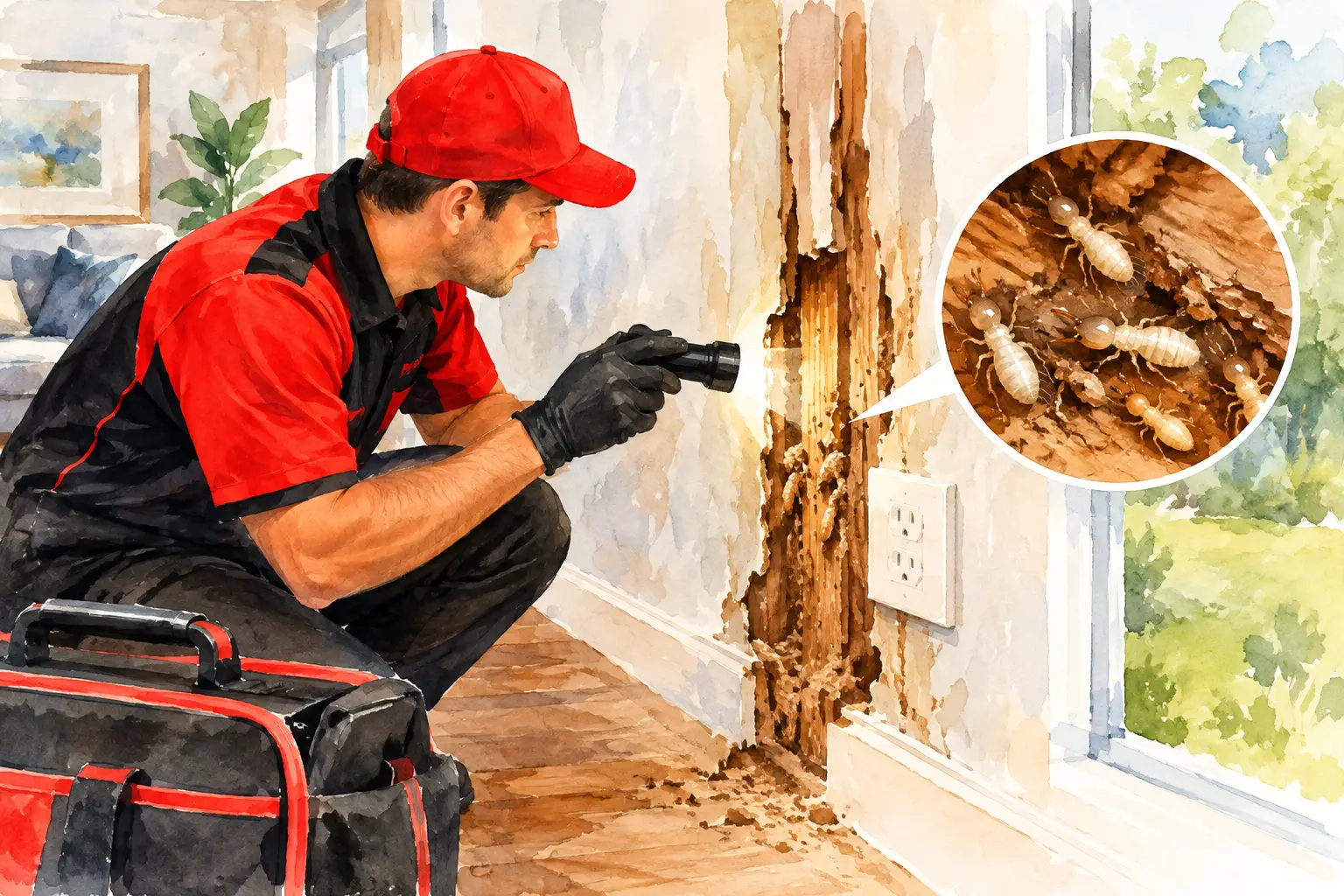
Termite activity at slab penetrations is often hidden behind skirting boards, kitchen cabinets, shower recesses, or wall linings. Homeowners may first notice a door that suddenly sticks, blistered paint, a hollow sound when tapping trim, sagging flooring, or fine mud material appearing at a crack or service opening.
Moisture issues deserve attention too. A leaking shower, dripping pipe, blocked subsoil drain, or air-conditioner overflow can make nearby areas more attractive to termites. Moisture does not cause termites, but it can increase the suitability of a concealed entry zone.
If you find mud leads, damaged timber, or suspected activity, avoid pulling the material apart or spraying household insecticide into the opening. That can disturb the colony and make professional treatment harder to target. Arrange a detailed termite inspection instead, including accessible internal areas, external slab edges, roof voids, wet areas, and the visible components of any installed barrier.
Refill timing and maintenance for reticulation systems
There is no single refill interval that suits every system or every property. The treatment product, original installation design, soil conditions, system condition, construction changes, and label directions all affect the timing. Your service records should identify the system type, treatment zone, chemical used, and recommended replenishment period.
A refill should not be treated as a quick pump-and-go visit. Before recharging a Termguard, TermStop, TermX, Altis, Camilleri, Cavtech, or Reterm system, the technician should locate the refill points, assess visible pipework and valves, check for signs of damage or alteration, and confirm whether the system is appropriate for the current risk.
For example, a renovation in Stanhope Gardens that added a bathroom, deck, or new drainage line may have affected the original barrier layout. A refill can still be valuable, but it may need to be paired with localized treatment or an inspection of newly created penetration points. TERMITE HELP can service and assess multiple system brands rather than assuming every network operates the same way.
Keep barrier certificates, refill invoices, construction plans, and renovation records together. They help identify protected zones and allow a technician to spot where later work may have interrupted termite protection.
What builders should get right before the slab pour
For builders and project managers, penetration protection needs coordination before concrete arrives. Plumbing, electrical, communications, hydraulic, and mechanical services should be identified early so barrier components can be fitted without gaps, incompatible materials, or rushed site modifications.
The installation should be documented with clear records and photographs before concealment. This matters at handover, but it also gives future owners a practical reference when they need to arrange a pre-construction termite protection review, barrier maintenance, or renovations years later.
Site sequencing matters. A correctly installed collar can be defeated if a service is moved after the inspection, if a pipe is cut through protected material, or if untreated fill is placed against an unprotected slab edge. Builders should also plan for access to reticulation refill points where a replenishable system is specified.
When an inspection should happen now
Arrange an assessment promptly if you are buying a slab-on-ground property with no barrier paperwork, have found termite evidence near a wet area, are planning plumbing works, or cannot remember the last inspection or reticulation recharge. Regular inspections remain essential even where physical barriers or chemical systems are in place because every system can be affected by aging, movement, alterations, and changing termite pressure.
A careful inspection does more than search for live termites. It identifies risk conditions, checks accessible barrier components, documents concerns, and gives you a plan that fits the property rather than a generic spray. Where activity persists after treatment, a customer-first program should include a clear return-and-retreat response, not uncertainty about what happens next.
The smallest gap beside a pipe can become the route that changes a minor maintenance question into major concealed damage. Protecting and inspecting those details now gives your home a far better chance of staying one step ahead of termites.