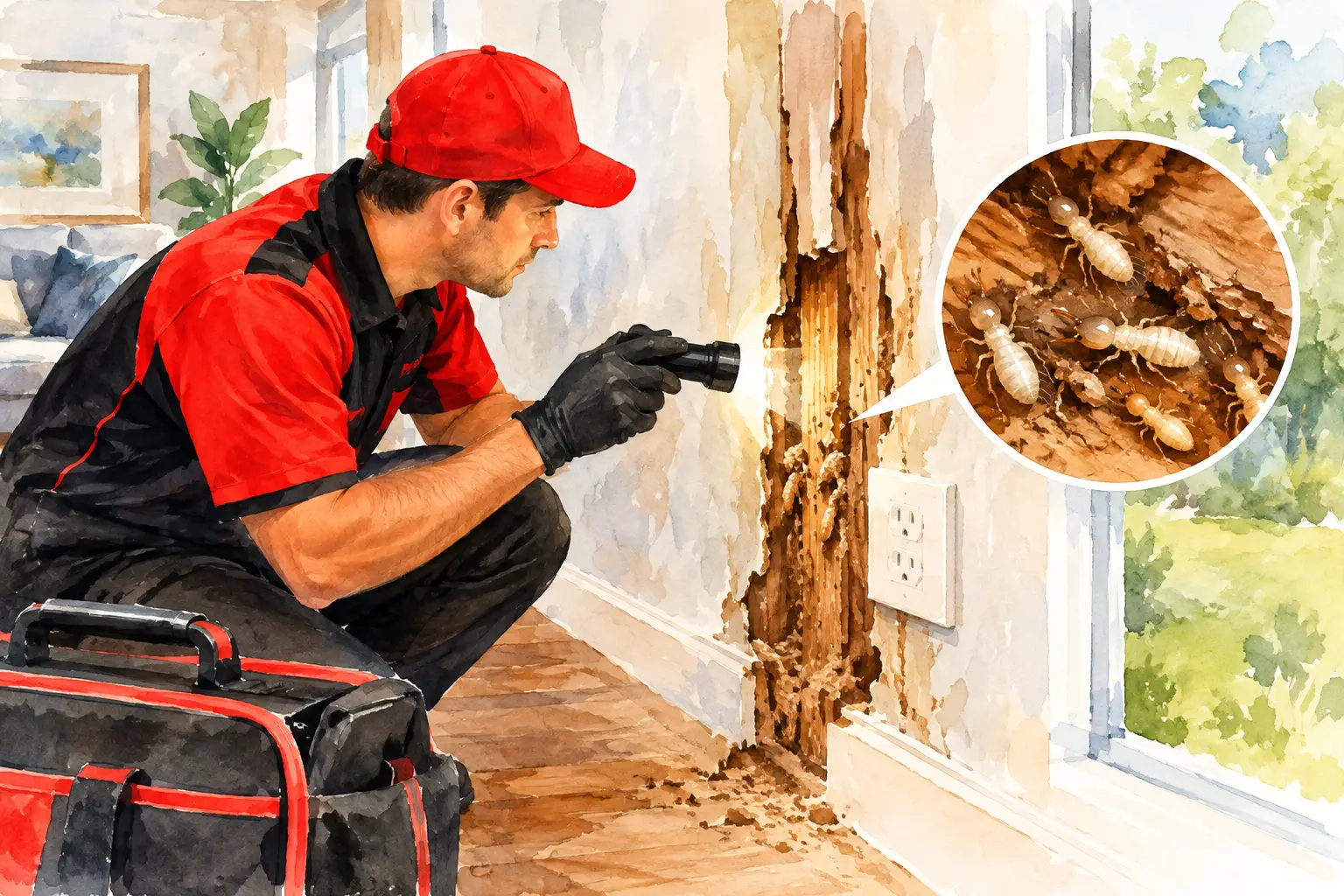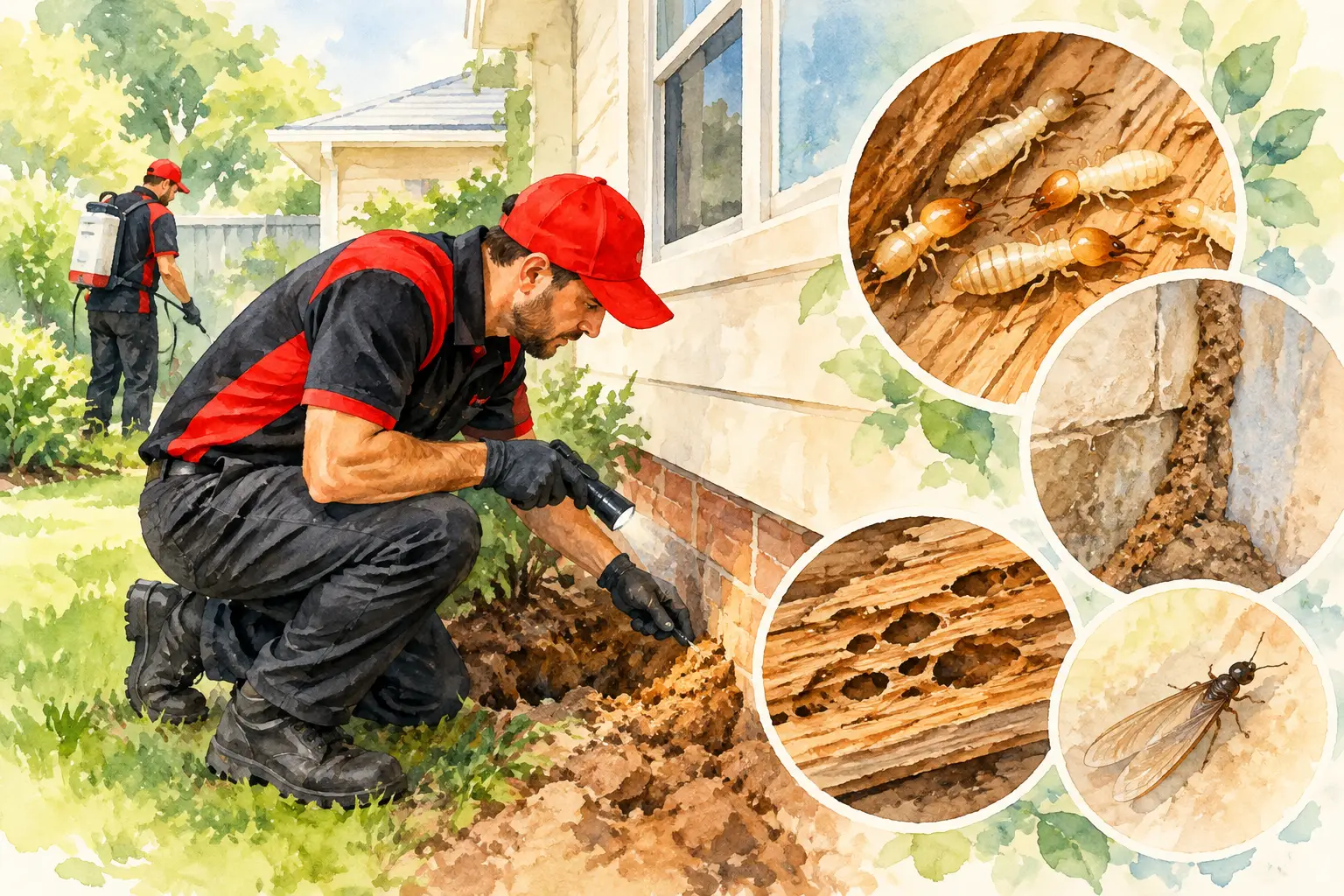

A wall cavity termite barrier protects one of the hardest parts of a home to inspect: the concealed space inside brick veneer, cladding, and framed walls. Subterranean termites can travel from the soil through tiny concealed routes, then feed on structural timber without creating obvious signs indoors. For Sydney homeowners, especially those buying, renovating, or managing a newer brick-veneer property, this hidden pathway deserves the same attention as the slab edge and perimeter soil.
What a Wall Cavity Termite Barrier Does
A wall cavity barrier is installed at vulnerable construction junctions to block concealed termite entry or force termites into a visible path where they can be detected. It is not simply an extra layer of material. It is part of a complete termite-management design that considers the slab, masonry, wall frame, service penetrations, weep holes, landscaping, and future inspection access.
In brick-veneer homes, the cavity between the external brickwork and internal frame can become a protected route. Moisture, debris, poorly detailed flashings, or altered ground levels can make this route more attractive. If termites enter unseen, they may reach timber framing, skirting boards, door jambs, and roof timbers before a homeowner notices damage.
Physical systems used in suitable new-build and renovation applications may include stainless-steel mesh, graded stone, polymer sheeting, or purpose-designed barrier products. Depending on the building design, a chemical reticulation system may also be installed to distribute a registered termiticide beneath or around the structure. The right approach depends on the construction detail, access, soil conditions, and whether the property is new or established.
Practical advice
A barrier does not make a home termite-proof. It creates a managed line of defense and improves the chance of finding termite activity before serious structural damage develops. Regular professional inspections remain essential.
Where Wall Cavity Protection Is Most Important
Wall cavity protection is particularly valuable where a concealed wall system meets the slab or footing. These junctions are common entry points because termites need only a narrow gap to move from soil into a protected area. In a new home, the barrier should be planned before brickwork, cladding, or internal linings make access difficult.
For established homes in Castle Hill, Kellyville, Baulkham Hills, and nearby areas, a technician may identify cavity risk during a termite inspection rather than recommend a one-size-fits-all installation. Existing construction can limit what can be installed physically, but that does not mean the risk cannot be managed. Chemical soil treatment, baiting, localized treatment, monitoring, and repair of moisture or drainage issues can all form part of the response.
Brick Veneer and Weep Holes
Weep holes allow moisture to drain from a brick cavity, so they must not be blocked with soil, mulch, paving, or garden beds. Blocking them can hide termite leads and create damp conditions that favor timber pests. At the same time, open weep holes are not an invitation to fill the cavity with household chemicals or sealants. Incorrect work can interfere with drainage and conceal future termite evidence.
A licensed termite specialist can assess whether the visible slab edge, weep-hole clearance, and landscaping provide reasonable inspection access. If the ground level has been raised after construction, this is often the first issue to correct.
Service Penetrations and Additions
Pipes, conduits, cables, and plumbing penetrations need careful detailing. Renovations can also compromise an original protection system when decks, patios, garden edging, extensions, or new services bridge the inspection zone. A wall cavity barrier should be reviewed whenever work changes the building perimeter.
Physical Barriers and Chemical Systems Compared
Both physical and chemical options can be effective when correctly specified and maintained. They work differently, and many homes benefit from a combination rather than relying on one method alone.
| Protection method | How it helps | Ongoing consideration |
|---|---|---|
| Physical cavity or perimeter barrier | Blocks concealed access or directs termites into an observable route. | Can be compromised by later building work, poor drainage, or bridged landscaping. |
| Chemical reticulation system | Distributes termiticide through installed piping at the perimeter or under slab. | Requires scheduled inspection, testing, and refills based on the product label and system condition. |
| Baiting and monitoring | Targets foraging termite colonies and provides activity monitoring around the property. | Stations need routine checks and prompt action when activity is found. |
When Does a Wall Cavity Barrier Need Inspection?
The barrier itself may not be fully visible after construction, which is why inspections focus on the evidence around it. A professional inspection should assess accessible slab edges, weep holes, wall junctions, roof voids, subfloors, wet areas, and any signs of concealed termite movement. Thermal detection and moisture assessment may help identify suspicious areas, but they do not replace a thorough physical inspection.
Annual inspections are a sensible baseline for many homes. Higher-risk properties may need more frequent review, particularly where there is known termite pressure, dense gardens against walls, a history of activity, leaking plumbing, subfloor moisture, or incomplete inspection access. Homes with installed reticulation should also follow the system’s documented service requirements. TERMITE HELP can inspect and service Termguard, TermStop, TermX, Altis, Camilleri, Cavtech, and Reterm systems, including checks for accessible emitter points, damaged caps, blocked lines, and refill needs.
If you are purchasing a property, request a dedicated timber-pest inspection rather than assuming a visible barrier or old warranty paperwork provides current protection. A barrier may be original, but the site conditions around it can change dramatically over time.
Warning Signs That Need Prompt Attention
Termites are secretive, but they leave clues. Mud leads on brickwork, piers, pipes, or slab edges are an immediate reason to arrange an inspection. Other warning signs include hollow-sounding timber, blistered paint, tight doors or windows caused by damaged frames, fine soil-like material near timbers, or unexplained moisture around a wall.
Do not break open mud leads, spray visible termites, or disturb affected timber before advice is obtained. Disturbance can cause the colony to retreat from the visible area and make treatment more difficult. Keep people and pets away from the area, take a clear photo if possible, and arrange a prompt assessment.
Protecting the Barrier After Landscaping or Renovation
Most barrier failures are not caused by the original system. They happen later, when a project accidentally creates a bridge around it. Soil piled against brickwork, mulch above weep holes, planter boxes, stored timber, attached decks, and unsealed service work can all reduce visibility or provide an easier route.
Keep a clear inspection zone around external walls where practical. Repair leaking taps and downpipes, direct surface water away from the building, and avoid storing timber, cardboard, or untreated landscaping materials against the home. Before a new patio, deck, extension, or garden redesign begins, arrange a review of the existing termite protection plan.
For existing activity, treatment may involve a targeted chemical treatment, a perimeter soil barrier, a baiting program, or repair and recharge of an installed reticulation system. The best choice depends on where termites are active, how the house is constructed, access around the walls, and whether there is a functioning protection system already in place. Learn more about professional termite inspections, tailored termite treatment, and ongoing Termguard refills before deciding on a single approach.
Practical advice
Keep all barrier certificates, system plans, refill records, and renovation invoices together. These documents help a technician locate protected zones and make better decisions when the property changes hands or undergoes work.
A hidden wall cavity should never be the place termites get a head start. A clear inspection plan, maintained barriers, and fast action on warning signs give your home the practical protection it needs.