A thin brown line climbing a brick pier, a door that suddenly sticks, or paint that bubbles without an obvious leak can be the first signs of subterranean termites. These termites work out of sight, often entering from the soil and feeding inside timber long before surface damage becomes clear. For Sydney homeowners, especially around Castle Hill, Kellyville, Baulkham Hills, Ryde, and the North Shore, acting on small changes can protect a major investment from expensive structural damage.
7 Signs of Subterranean Termites to Take Seriously
1. Mud tubes on brickwork, piers, or walls
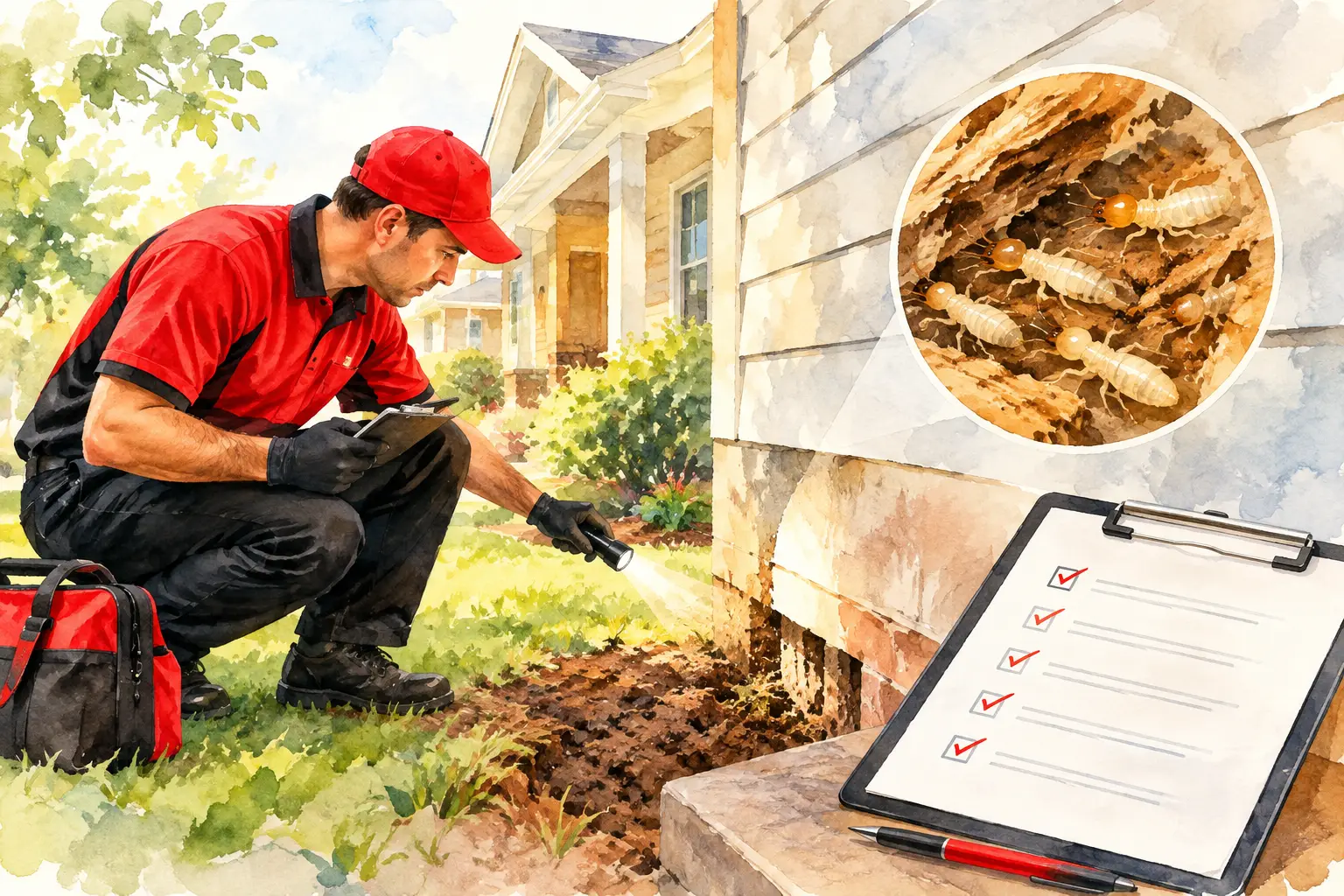
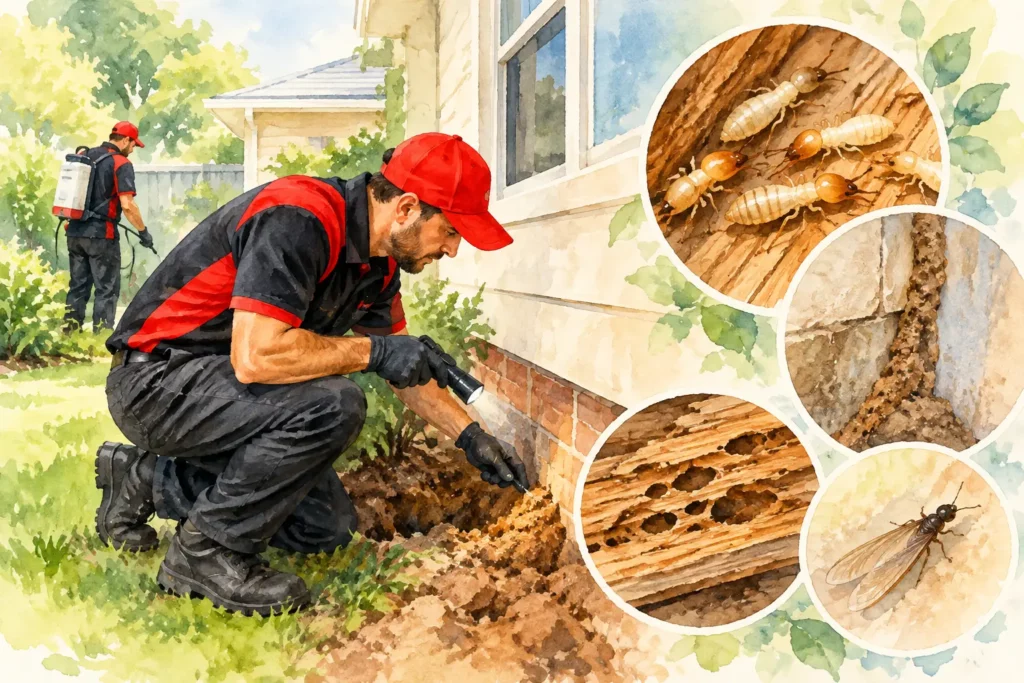
Subterranean termites need humidity and protection from open air. They build pencil-width shelter tubes from soil, saliva, and timber particles to travel between the ground and a food source. You may find them on external brickwork, concrete piers, retaining walls, subfloor supports, slab edges, or inside a garage.
A mud tube is a strong warning sign, but do not simply knock it down and assume the issue has gone away. Breaking a tube may cause termites to divert to another concealed route. Leave the area as undisturbed as possible and arrange a professional assessment to establish whether activity is current and where the colony is entering.
2. Timber that sounds hollow or feels thin
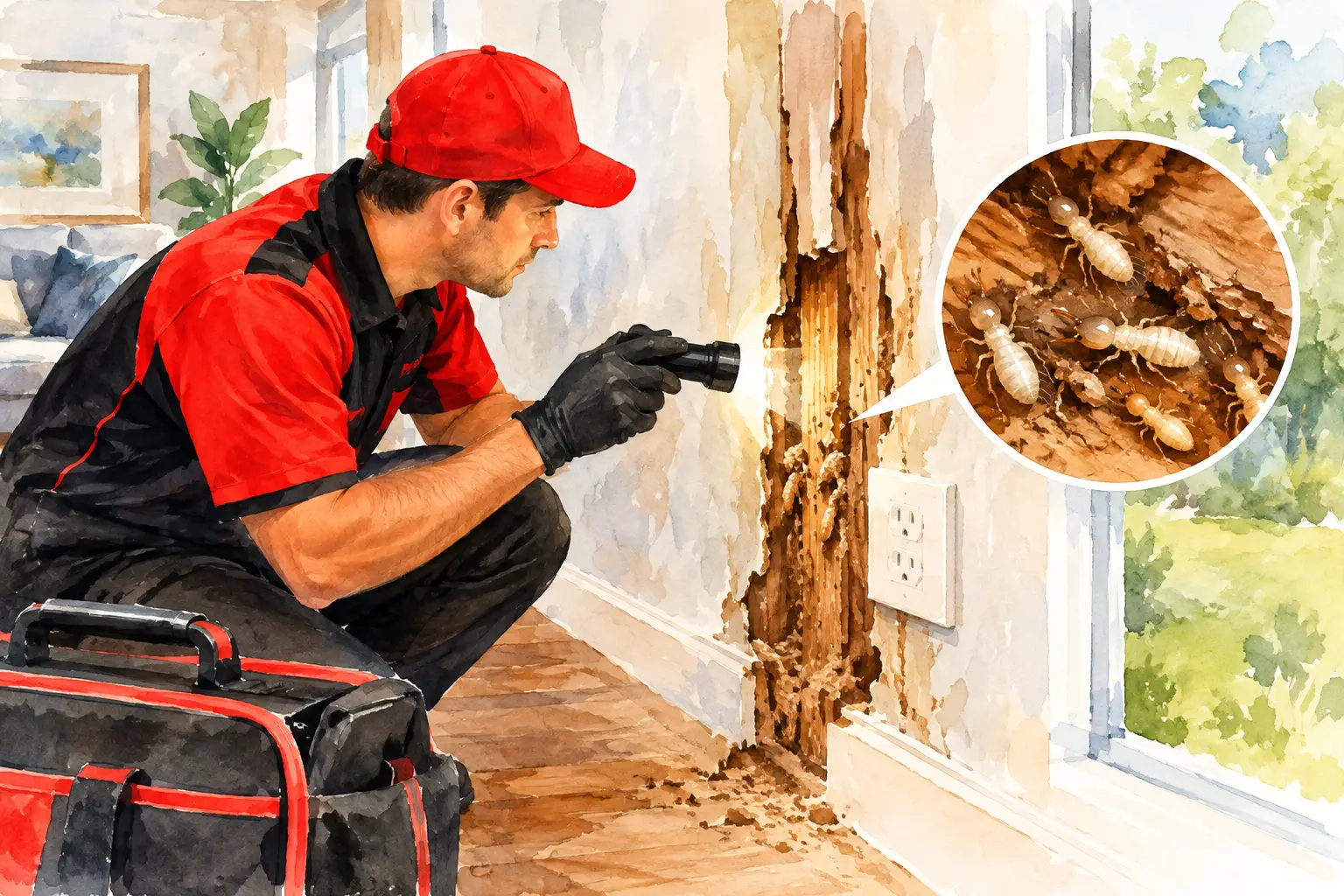
Termites generally eat the softer wood between the grain, leaving a thin outer surface that can look intact. Tap a suspected skirting board, window frame, architrave, floorboard, or timber post. A hollow sound, papery feel, or localized soft spot warrants attention.
This symptom is not proof by itself. Water damage, wood rot, and old timber repairs can create similar effects. The difference is that termite damage often follows galleries along the grain and may contain packed soil or a rough, layered internal appearance.
3. Tight doors, windows, or warped trim
Termite activity can introduce moisture into timber as insects move through galleries. That moisture may make door frames, window frames, and trim swell or distort. A door that becomes difficult to close can also be caused by seasonal movement, humidity, or foundation settlement, so it should be investigated alongside other clues rather than treated as a diagnosis.
In houses with timber-framed additions, enclosed verandas, or older window joinery, this sign deserves particular care. A targeted inspection can distinguish termite damage from ordinary building movement.
4. Bubbling paint, blistered plaster, or unexplained marks
Paint that looks bubbled or blistered is often blamed on a plumbing leak. Sometimes that is exactly what it is. However, termites feeding behind a wall can create enough moisture and disturbance to produce a similar finish.
Look for a pattern: paint changes combined with faint ripples, soft plaster, tiny pinholes, or nearby mud packing are more concerning than a single isolated mark. Wall cavities are difficult to assess from the surface, which is why thermal detection and moisture assessment can be valuable during a detailed termite inspection.
Do not spray household insecticide into a suspected termite area. It can disturb active termites, force them into another part of the structure, and make a professional treatment plan less effective. Keep the area accessible and arrange an inspection promptly.
5. Frass-like material or soil in damaged timber
Drywood termites leave distinctive dry pellets, but the major destructive termites affecting Sydney homes are typically subterranean species. They usually keep their workings concealed and may pack galleries with damp soil-like material instead of pushing pellets out.
If you uncover damaged timber and see earth-colored material, pale insects, or creamy-white workers, avoid pulling the area apart. Take a clear photo if possible, then have the finding assessed. Ants can also nest in decayed timber, and correct identification matters before any treatment is selected.
6. Flying termites or discarded wings
Winged reproductive termites swarm when conditions are suitable, commonly after warm rain. They can be drawn to lights around windows, patios, and roof spaces. A swarm does not automatically mean a colony is feeding inside your house, but discarded wings near windowsills, vents, or light fittings mean termites are active somewhere nearby.
Termites have straight antennae, a broad waist, and wings of equal length. Flying ants have elbowed antennae, a narrow waist, and differently sized wings. If you are unsure, collect a few specimens in a small container for identification rather than relying on an online image match.
7. Live termites found during renovations or garden work
Removing a skirting board, lifting a loose floorboard, pruning against the house, or moving a timber sleeper can reveal active termites. This is the time to pause the work. Exposing a colony may make it retreat, but retreat does not mean it has left the property.
A professional can inspect the surrounding structure, locate conducive conditions, and recommend whether baiting, a non-repellent soil treatment, localized treatment, or barrier repair is appropriate. Read more about professional termite inspections before renovating or purchasing a home where hidden damage is a concern.
Why subterranean termite signs are easy to miss
Subterranean termites do not need to emerge into a room to feed. They can travel from soil through concealed construction gaps, around service penetrations, behind cladding, beneath flooring, and through wall cavities. A concrete slab is not a complete barrier when there are joints, cracks, pipe penetrations, or unprotected edges.
That is why visible signs can represent a longer-running issue, not necessarily a new one. It also explains why a quick visual walk-around is not a substitute for a methodical inspection of accessible roof voids, subfloors, external perimeters, wet areas, garages, and timber landscaping near the building.
Properties in leafy areas of the Hills District and along the Central Coast can have extra risk factors: mature gardens, moisture-retaining mulch, timber retaining structures, poor drainage, and concealed slab edges. Risk is property-specific, though. A newer home can be vulnerable if its original barrier has not been maintained or if later landscaping bridged the protected zone.
What to do when you spot possible termite activity
First, avoid disturbing the suspected area. Do not remove mud tubes, pull apart damaged timbers, or apply store-bought sprays. Second, move stored cardboard, firewood, and loose timber away from the building if doing so does not disturb the active location. Finally, book a qualified inspection that identifies active termites, damage extent, entry points, and the condition of any existing protection system.
If your home has a chemical reticulation system, ask whether its emitter valves, perimeter lines, and refill records should be checked. Systems such as Termguard, TermStop, TermX, Altis, Camilleri, Cavtech, and Reterm are designed to allow replenishment of a chemical soil barrier without major excavation. They still require the right product, correct pressure, accessible components, and servicing at intervals suited to the system and site conditions.
| Finding | What it may indicate | Best next step |
|---|---|---|
| Mud tubes on masonry | Possible active termite travel route | Leave intact and arrange an inspection |
| Hollow or soft timber | Termites, decay, or moisture damage | Have the timber and moisture source assessed |
| Discarded wings indoors | Nearby termite swarm or colony | Collect a sample and schedule an inspection |
Treatment and protection depend on the property
There is no responsible one-size-fits-all termite treatment. Active termites may be managed with a baiting and monitoring program, a carefully selected non-repellent chemical treatment, or a combination of approaches. Where a reticulation system is installed, a refill or repair may restore a critical part of the home’s existing protection plan.
Baiting can be useful where colony elimination is the objective or where soil treatment access is limited, but it requires monitoring and patience. Soil barriers can provide durable protection when installed correctly, yet landscaping changes, drainage issues, and construction alterations can compromise coverage. For new builds, physical barriers and chemical systems should be designed around slab edges, penetrations, wall cavities, and compliance requirements before construction conceals them.
TERMITE HELP can assess active termite evidence and maintain existing systems with inspections, barrier recharges, repairs, baiting, and ongoing monitoring. If termite activity persists after service, the team returns to re-treat at no additional charge under its service commitment. Homeowners planning a system top-up can also review termite reticulation system refills to understand why records and system-specific servicing matter.
Annual professional inspections are commonly recommended for homes in termite-prone areas, with more frequent checks appropriate where there is a history of activity, high moisture, dense landscaping, or a known barrier concern. Your inspector can recommend an interval based on the property, not a generic calendar rule.
Small signs deserve a calm but fast response. An inspection now can provide clarity, protect hidden structural timber, and give you a practical long-term prevention plan rather than leaving your home’s defenses to chance.