
A hollow skirting board, a blistered wall, or mud tubes beside a slab can quickly raise the same question: does termite damage insurance coverage Australia protect the cost of repairs? For most homeowners, the difficult answer is that standard home insurance commonly excludes termite damage. That makes early inspection and a maintained protection system far more than routine maintenance – they are a direct defense for the value of your home.
Why termite damage is usually excluded by insurers
Australian building policies are designed around sudden, insured events such as storms, fire, burst pipes, and some forms of accidental impact. Subterranean termite activity is usually treated differently. Insurers often view it as gradual damage that could potentially be reduced through regular maintenance, professional inspections, and prompt repairs.
Policy wording varies, but exclusions commonly refer to damage caused by insects, vermin, pests, or gradual deterioration. The exclusion can apply not only to the termites themselves, but also to the cost of repairing timber framing, flooring, architraves, cabinetry, and other building materials they have damaged.
This is especially confronting because termites can work out of sight. A colony may enter through a slab edge, construction joint, service penetration, weep hole, or concealed wall cavity, then feed behind paint and plaster for months. By the time visible signs appear, repairs may involve both termite treatment and substantial building work.
Practical advice
Do not rely on a general assumption that your policy will cover pest damage. Read the Product Disclosure Statement and ask your insurer specifically about termite damage, resulting damage, emergency make-safe work, and any conditions that apply to vacant or investment properties. Get the answer in writing where possible.
Can termite damage insurance coverage in Australia ever apply?
Sometimes there may be a narrow circumstance worth discussing with your insurer, but it depends entirely on the policy wording and the facts of the loss. For example, a policy may respond to a separate insured event that occurs after termites have weakened part of a structure. That does not automatically mean the termite damage itself is covered.
Similarly, a policy may include limited pest-related benefits, emergency accommodation, or cover for an insured event that exposes previously hidden damage. These provisions are not a substitute for termite protection, and they should never be assumed to fund treatment or structural restoration.
Make a claim if you believe an insured event is involved, but avoid authorizing major demolition before documenting the issue. Take clear photographs, retain inspection reports and invoices, and ask the insurer what evidence they need. If active termites are present, treatment should still be arranged quickly to stop further damage.
What a termite inspection can protect you from
A professional inspection cannot guarantee that every concealed termite is visible, but it is one of the strongest practical measures available to a homeowner. A thorough inspection assesses accessible interior areas, subfloors, roof voids, external walls, gardens, fences, retaining timbers, and conditions around the building that may encourage concealed entry.
TERMITE HELP uses inspection findings to identify both activity and risk. That may include moisture around plumbing, timber-to-soil contact, blocked subfloor ventilation, concealed slab edges, leaking showers, garden beds built over weep holes, or a chemical reticulation system that has not been refilled on schedule.
For homes in Castle Hill, Kellyville, Baulkham Hills, Stanhope Gardens, and nearby growth areas, inspection history matters. Many properties have extensive landscaping, retaining structures, additions, and service penetrations that can change termite access long after construction. A new-looking home is not automatically a protected home.
Learn what is checked during a professional termite inspection before purchasing a property, after renovations, or if your existing protection has lapsed.
Warning signs homeowners should not ignore
Termites often avoid open air and light, so obvious signs may appear late. Hollow-sounding timber, doors that suddenly bind, bubbling paint, unexplained cracks in trim, and soft areas in flooring can all justify an inspection. Mud shelter tubes on brickwork, piers, pipes, or slab edges require immediate attention.
Swarming winged insects can also be significant. Flying termites are not always a sign that your house is under attack, but they indicate a mature colony nearby or within the property. Do not spray tubes, disturb damaged timber, or pull apart affected walls before an assessment. This can cause termites to retreat into hidden areas and make the infestation harder to trace.
Practical advice
If you find live termites, keep people and pets away from the area, photograph the evidence, and arrange an inspection promptly. Avoid household insect sprays. The right treatment depends on the colony’s location, the construction of the home, and whether a barrier or baiting strategy is already in place.
Prevention is the financial gap insurance does not provide
Because standard insurance frequently excludes termite damage, prevention carries the financial weight that a claim might otherwise carry. The best plan is not a one-time spray. It is an ongoing program that matches the home’s construction, termite pressure, and any installed barrier system.
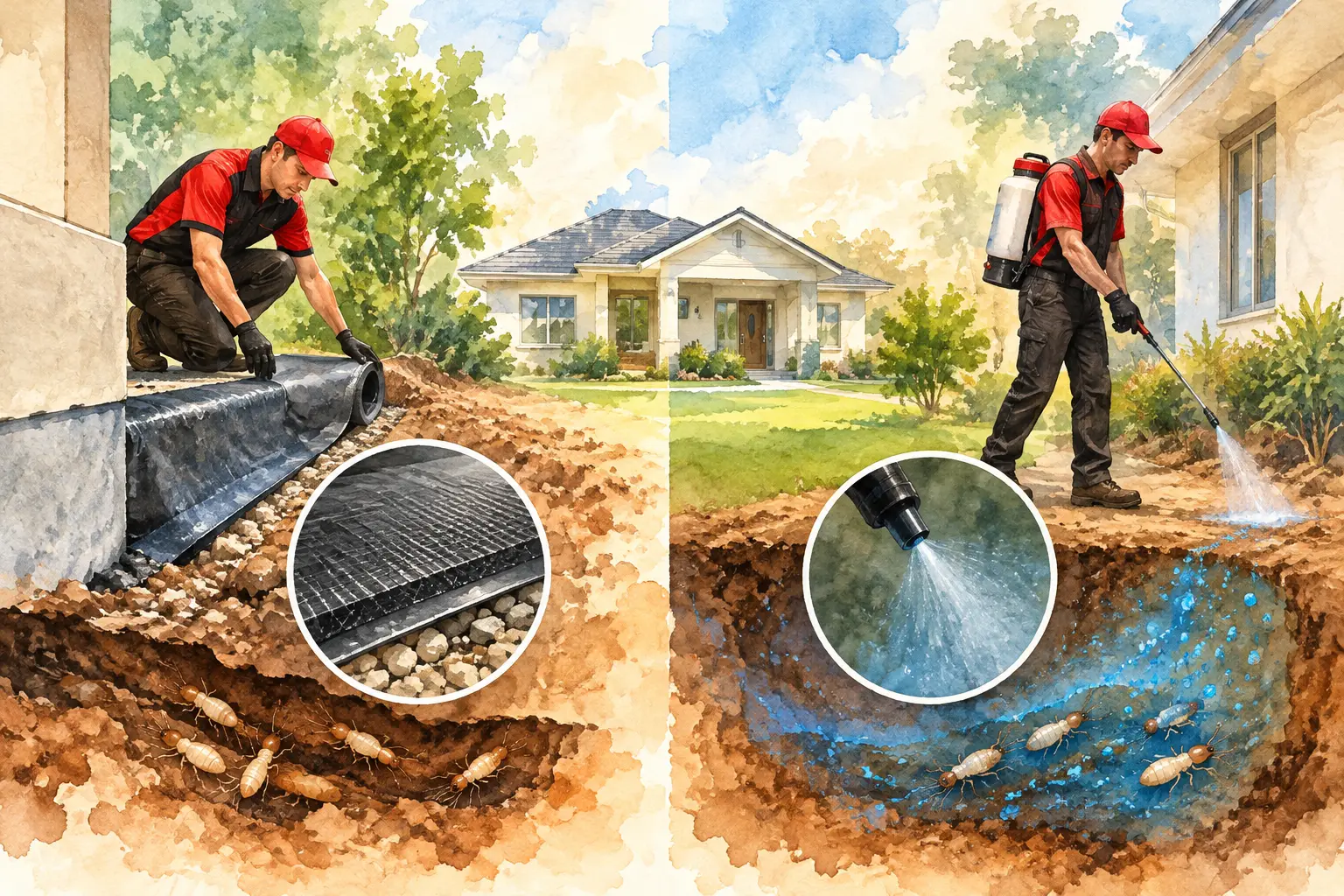
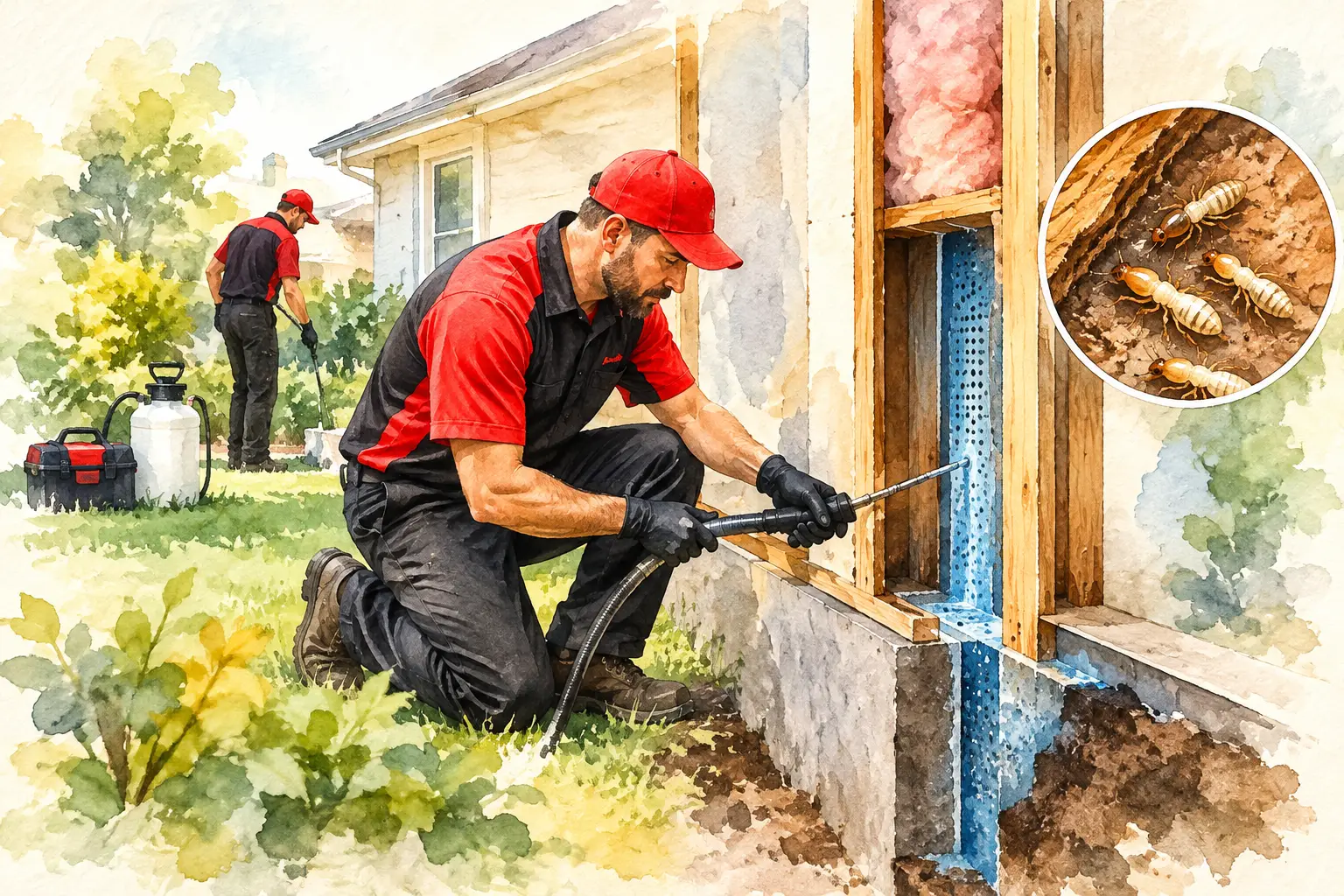
Chemical soil barriers may be applied directly to accessible soil or delivered through reticulation pipework. Systems such as Termguard, TermStop, TermX, Altis, Camilleri, Cavtech, and Reterm use concealed lines and emitter points so a qualified technician can replenish the treatment zone with less disruption to paving and landscaping.
A refill is not automatically required every year. Timing depends on the chemical previously installed, system design, manufacturer directions, the integrity of the pipework, and the conditions around the house. However, letting a barrier expire without assessment creates a gap in protection precisely when homeowners may assume they are covered.
| Protection option | Best suited to | Key consideration |
|---|---|---|
| Reticulated chemical barrier | Homes with installed pipework around slabs or under paving | Needs correct refill timing, flow testing, and system repairs where required |
| Direct chemical soil treatment | Existing homes with accessible treatment zones | Access, drainage, landscaping, and construction details affect suitability |
| Baiting and monitoring | Properties where colony elimination and ongoing monitoring are appropriate | Requires regular monitoring and timely station servicing |
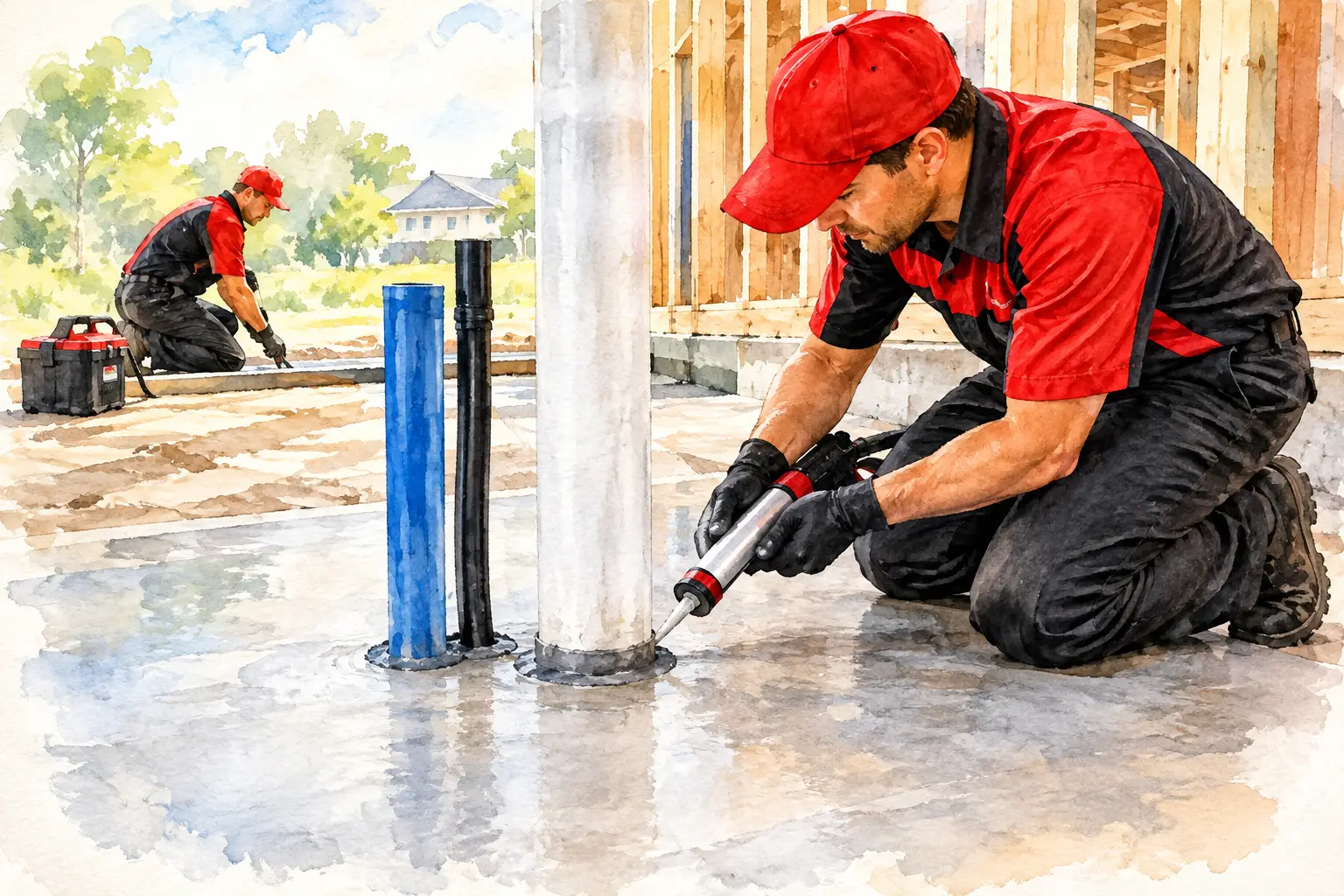
| Physical barrier protection | New builds and major construction projects | Must be integrated correctly around penetrations, joints, and slab details |
What to do after discovering suspected termite damage
First, arrange a professional assessment to confirm whether activity is current, identify likely entry points, and determine the extent of accessible damage. Treatment should be designed before repair work begins. Replacing damaged timber without treating the colony or entry route can leave the home exposed to reinfestation.
Next, ask for a clear treatment recommendation. Non-repellent chemical treatments can allow termites to move through a treated zone and transfer the active ingredient within the colony. Baiting may be preferred in some sites, while a reticulation refill or repair may restore a designed barrier. The right answer depends on the property, not a generic package.
Finally, organize a repair assessment once termites are controlled. Structural timber, load-bearing framing, and safety-critical areas should be evaluated by an appropriately qualified building professional. Keep your inspection report, treatment paperwork, barrier records, and repair invoices together. They can support future maintenance decisions and help demonstrate responsible property care when selling.
Protect the home before the damage becomes your bill
If you are buying, renovating, noticing warning signs, or overdue for a barrier refill, act before hidden activity turns into a major repair project. TERMITE HELP provides tailored termite treatment, inspections, baiting, and reticulation servicing across Sydney and surrounding service areas. Where termite activity persists after service, the team returns to re-treat at no charge under its service commitment.
A policy exclusion is frustrating, but it also makes the next step clear: know your risk, maintain your protection, and have suspected activity assessed while the damage may still be limited.